
Strolling through centuries of history under clear blue skies in one of England’s most photogenic cities
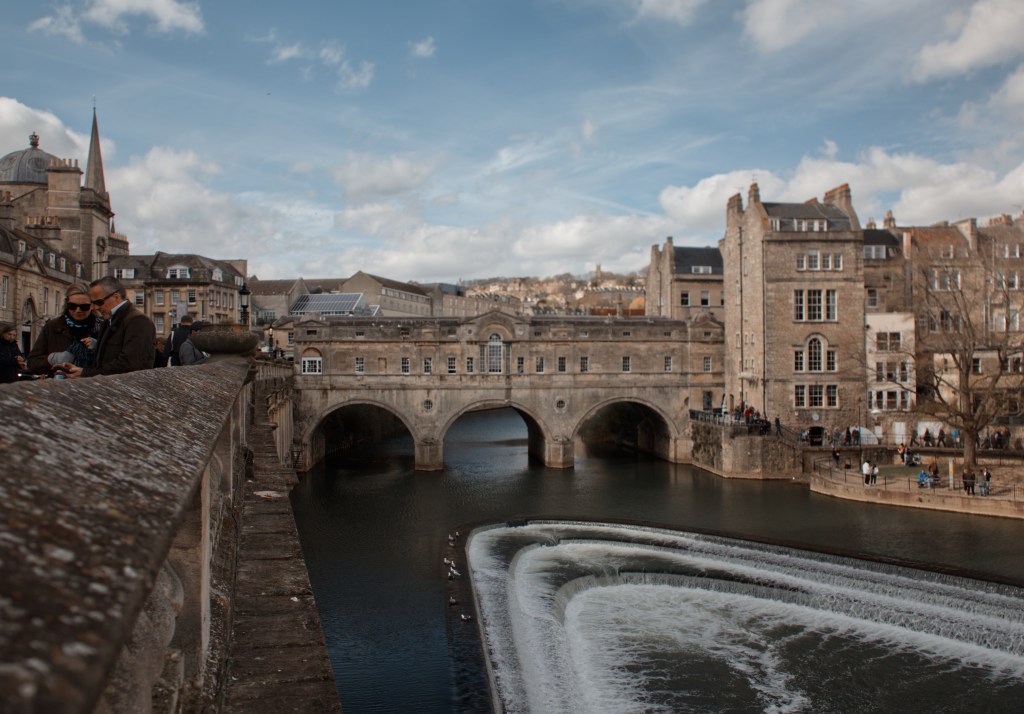
There’s something magical about Bath when the sun decides to shine. The Georgian architecture and honey-coloured Bath stone, which gives the city its distinctive golden glow, just radiates warmth, and with the city warming up now that spring is here, this UNESCO World Heritage site is transported into a photographer’s and videographer’s paradise. On a beautiful spring afternoon at the end of March, I set out on a Bath, England walking tour to find historic Bath photography spots and capture the essence of this Georgian gem in the south west of England.
Read on for more, or follow in my footsteps with my 4K walking tour below, and if you’re interested in more walking tours and travel guides from the UK and around the world, consider subscribing to my YouTube channel.
Afternoon light at Bath Abbey square
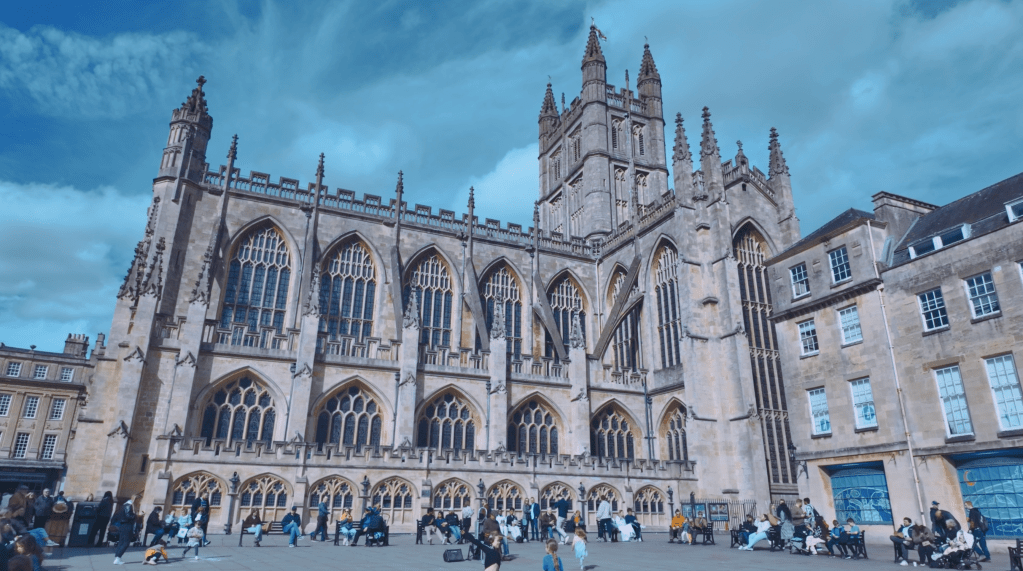
The afternoon began at the Parade Gardens in the heart of the city. Walking past Sally Lunn’s house, the oldest house in Bath, I arrived at Abbeygate, a charming square of gorgeous Georgian buildings and shops. Lilting music drew me up to Bath Abbey Square, where below the Abbey’s intricate façade creating a spectacular play of shadows across the ancient stonework sits a man playing a guitar, filling the air with sweet song. The Abbey, with its fan-vaulted ceiling and striking stained glass, has stood as the city’s spiritual centre since the 7th century, though the current building largely dates from the 16th century.

What many visitors miss is the fascinating ladder of angels carved into the west front, depicting angels ascending and descending between heaven and earth. It’s these small details that make Bath a photographer’s dream. The square itself buzzes with energy and music as local vendors set up and the tour groups gather, creating wonderful candid photography opportunities against the backdrop of centuries-old architecture.

Crossing the historic Pulteney Bridge
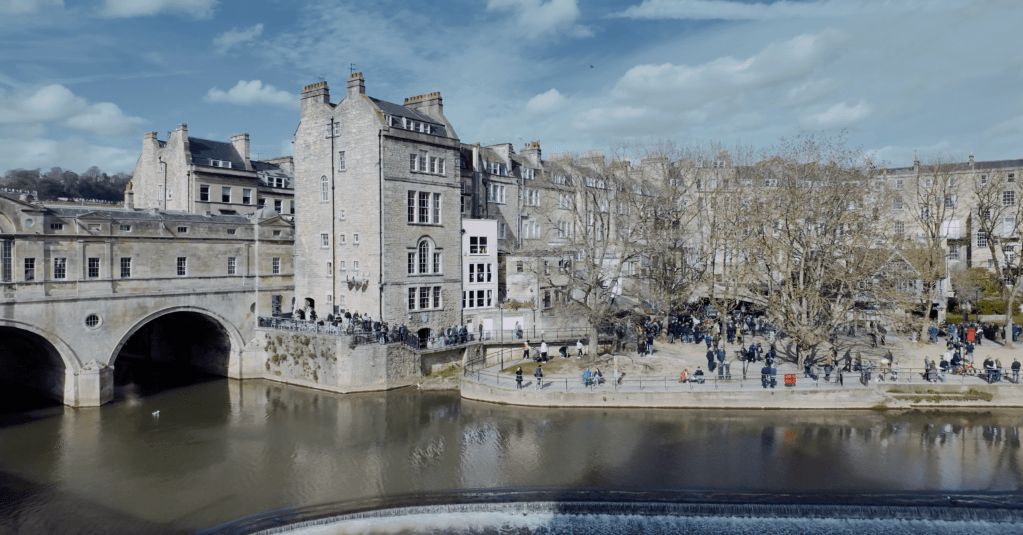
From the Abbey, a short walk brought me to what might just be Bath’s most iconic structure, the Pulteney Bridge. There are only four bridges in the who world which have shops lining both sides, and one of them is this 18th-century masterpiece arcs across the River Avon with elegant arches and classical proportions. The bridge was designed by Robert Adam in the Palladian style and completed in 1774, connecting the city with the land of the Pulteney family.

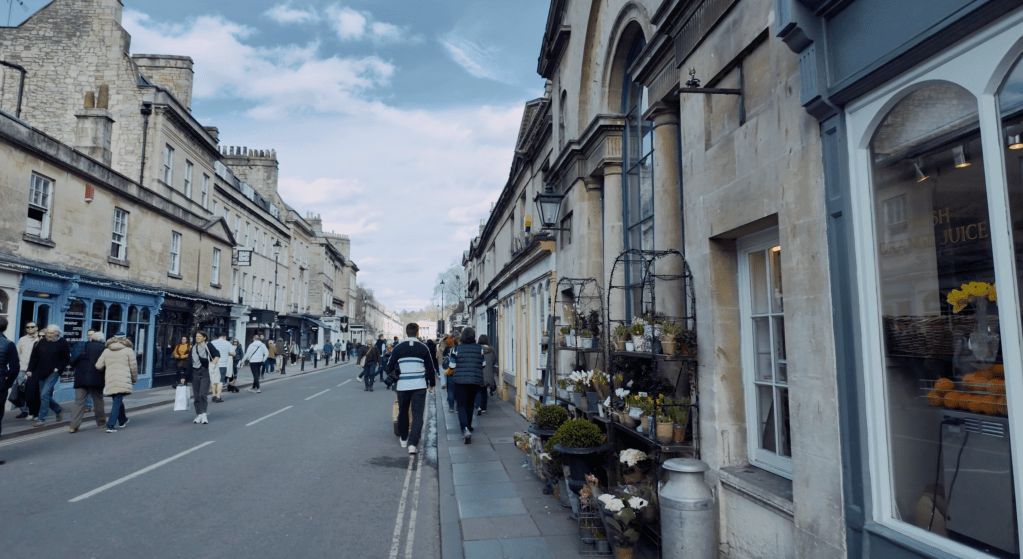
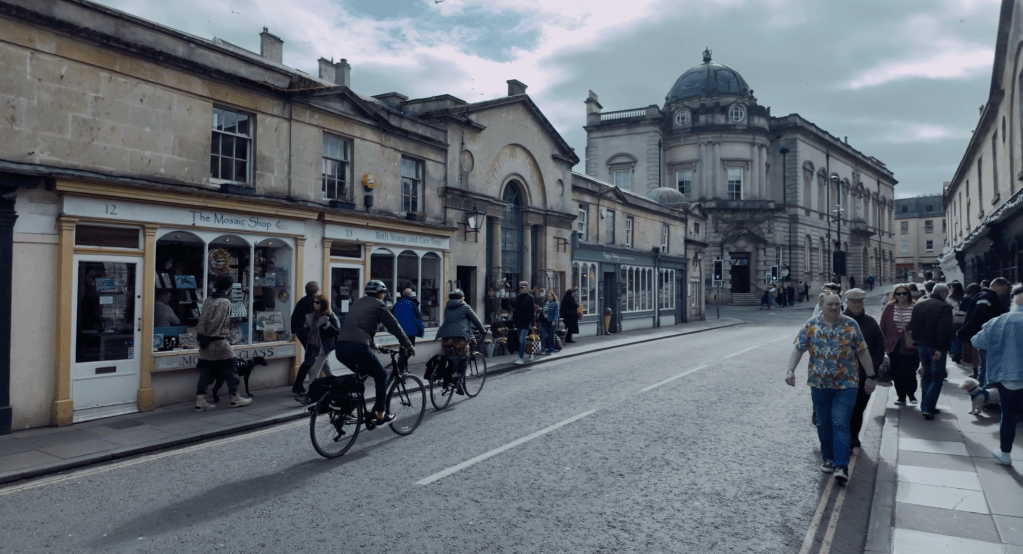
The best views come from the Parade Gardens below, where photographers can capture the bridge with the cascading weir beneath it. On this sunny afternoon, the water sparkled as it tumbled over the crescent-shaped dam, creating a mesmerizing contrast with the structured elegance of the bridge above. Pro tip for photographers: mid-morning light creates stunning reflections on the river, perfectly highlighting the bridge’s classical symmetry.

The Circus: A perfect circle
After lunch, I made my way uphill to The Circus, one of Bath’s most extraordinary architectural achievements. It was designed by John Wood the Elder and completed in 1768 by his son, and this perfectly circular arrangement of townhouses represents Georgian urban planning at its finest. The façades are adorned with intricate carvings of masks, acorns and serpents, with hidden Masonic symbols that tell stories to those who know where to look.

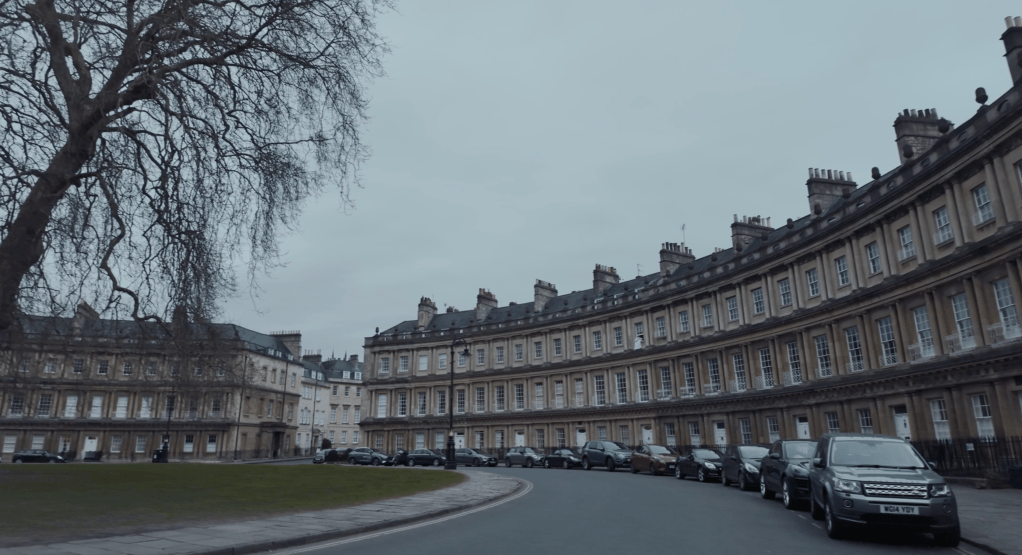
Standing in the centre of The Circus, looking up at the three curved segments of identical townhouses with their Doric, Ionic, and Corinthian columns, you are struck by how the design is such a perfect ring of golden stone. The central grassy area was originally a reservoir, which is just one of many fascinating historical details that make Bath such a rewarding destination for curious travellers.
Royal Crescent: The Crown Jewel
Just a short stroll from The Circus lies one of Bath’s most famous landmarks, the Royal Crescent. This sweeping arc of 30 terraced houses, designed by John Wood the Younger and built between 1767 and 1774, remains one of the most impressive examples of Georgian architecture anywhere in the world. The crescent shape creates a theatrical backdrop to the expansive lawn that rolls down toward the city centre.
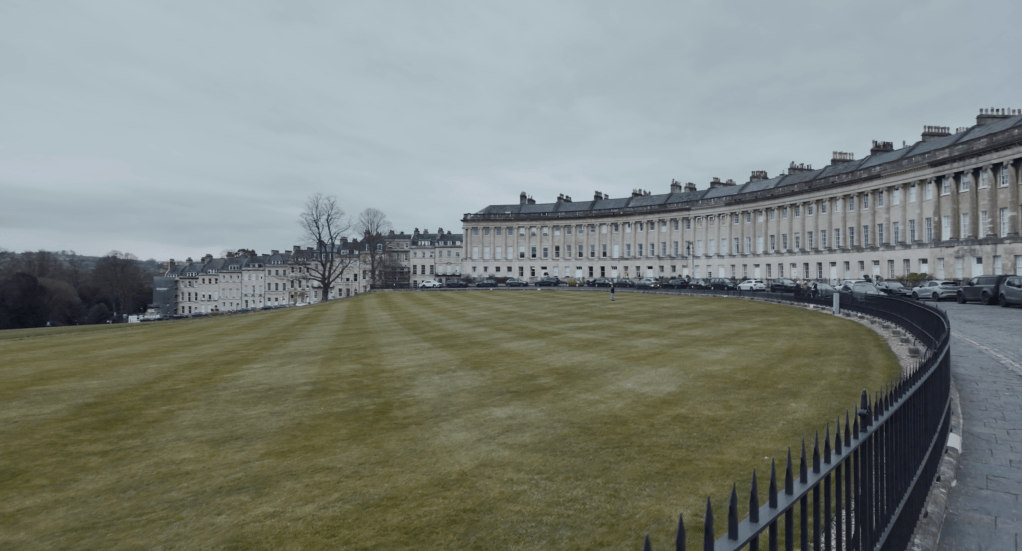
The uniform grandeur of the exterior while hinting at the individual character of each residence behind the symmetrical front appears almost impossibly perfect – a must-capture for any photographer or videographer visiting Bath.
As the day winds down
As the afternoon light began to soften, I found a quiet bench in Royal Victoria Park below the Crescent. From here, you can capture both the architectural wonder above and the natural beauty of the park that has fronted it since 1830. The contrast between the manicured Georgian splendour and the more relaxed Victorian park design tells a visual story of Bath’s evolution through different eras.
Why Bath deserves more than a day
My afternoon in Bath was true of my experience in many historic cities – a single day is barely enough time to scratch the surface. Beyond the iconic landmarks I’ve shared here lie Roman Baths that give the city its name, superb museums, hidden gardens and architectural wonders around virtually every corner. The city’s compact nature makes it walkable, but its cultural depth demands more time to fully appreciate.
Nearby attractions and getting to Bath
Within 30 minutes of Bath
Bradford-on-Avon (8 miles, 15-minute train journey)
This charming riverside town feels like a miniature Bath with its honey-coloured stone buildings but offers a more intimate experience. Don’t miss the stunning 14th-century tithe barn, the Saxon Church of St. Laurence, and picturesque walks along the Kennet and Avon Canal.
Lacock Village (13 miles, 25-minute drive)
Owned almost entirely by the National Trust, this perfectly preserved medieval village has featured in numerous film and television productions including Harry Potter and Pride and Prejudice. Lacock Abbey, with its cloisters and the Fox Talbot Museum (dedicated to the pioneer of photography), makes for a fascinating visit.
Bristol (13 miles, 12-minute train journey)
Bath’s larger neighbor offers a completely different urban experience, with its vibrant harbor area, the iconic Clifton Suspension Bridge, street art by Banksy, and the award-winning M Shed museum chronicling the city’s history.
Within one hour of Bath
Stonehenge (33 miles, 45-minute drive)
This prehistoric monument needs no introduction. This UNESCO World Heritage site features massive standing stones arranged in a circular pattern dating back to around 3000 BCE. Pre-booking tickets through English Heritage is highly recommended to avoid disappointment.
The Cotswolds (various locations, 30-60 minute drive)
This Area of Outstanding Natural Beauty features rolling hills and picture-perfect villages built from golden Cotswold stone. Castle Combe (often called England’s prettiest village) is just 12 miles from Bath, while other highlights include Bibury, Bourton-on-the-Water, and Stow-on-the-Wold. I have a Bibury walking tour video and a Cotswolds walking tour video on my YouTube channel.
Wells (21 miles, 50-minute drive)
England’s smallest city features one of its most beautiful cathedrals, with spectacular medieval scissor arches and an astronomical clock dating from 1390. The Bishop’s Palace with its moat and gardens is equally impressive.
Getting to Bath
By Train
Bath Spa station is well-connected to the rest of the UK rail network:
- From London: Direct trains from London Paddington take approximately 90 minutes, running twice hourly
- From Bristol: Frequent service taking just 12 minutes
- From Cardiff: Direct trains take around 65 minutes
- From Birmingham: Direct service taking approximately 90 minutes
The station is centrally located, just a 5-minute walk from Bath Abbey and the Roman Baths.
By Car
Bath is accessible via several major roads:
- From London: M4 motorway (exit Junction 18), then A46 to Bath (approximately 2.5 hours)
- From Bristol: A4 or A36 (approximately 30 minutes)
- From the South: A36 or A367
- From the North: M5 to Bristol, then A4
Parking Tip: Bath’s historic center has limited parking and can be expensive. Consider using one of the Park and Ride services located on the outskirts of the city (Lansdown, Newbridge and Odd Down), which offer affordable all-day parking with regular bus services into the city center.
By Coach
National Express operates regular coach services to Bath from various UK cities. The Bath bus station is located on Dorchester Street, adjacent to the train station.
By Air
The nearest airports are:
- Bristol Airport (20 miles) – The Air Decker bus service runs directly from the airport to Bath city center
- London Heathrow (100 miles) – Connected to Bath by direct National Express coaches or train via London Paddington
- Birmingham Airport – Connected to Bath by train via Birmingham New Street
Getting Around Bath
Bath’s compact city centre means most attractions are within walking distance of each other. For those with mobility concerns, the hop-on-hop-off sightseeing buses offer a convenient way to see the major sights.
Capture your own Bath experience
If this glimpse of Georgian elegance has inspired you to experience Bath for yourself, I’ve created a much more detailed walking tour on my YouTube channel. The video takes you on a journey through the streets and sights of Bath I’ve mentioned here.
Bath exemplifies how history, architecture, and natural beauty can combine to create a destination that resonates with travellers of all interests. Whether you’re capturing the perfect photograph, exploring centuries of history or simply enjoying the atmosphere of one of England’s most elegant cities, Bath offers a quintessentially British experience that lives long in the memory.
Have you visited Bath? What was your favourite spot to photograph? Share your experiences in the comments below.
 Postcards From Dan