Discover the best Rome photography locations with practical tips on timing, gear, and hidden spots. Perfect for photographers visiting the Eternal City.

Ancient ruins bathed in golden light, ornate fountains tinkling in sunlit piazzas and hidden alleyways containing unexpected and beautiful treasures – there are som many photography locations in Rome that you just can’t stop coming back for more. As I prepare for my third trip to the Italian capital, I hope this guide will help you capture the essence of the Eternal City, whether you’re there for a weekend or you have a full week to explore.
Best time to visit Rome for photography
Golden seasons (April–May, September–October)
Rome’s shoulder seasons offer the perfect combination of comfortable temperatures, softer light and fewer tourists, making them the best time to photograph Rome attractions. Spring offers blossoming trees along the Tiber River, while autumn casts its warm glow over the terracotta buildings.
Sunrise magic (5:30–7:30 a.m.)
Early mornings in Rome offer two unbeatable advantages: the soft, golden light that photographers dream about and relatively empty streets. Even the typically crowded Trevi Fountain can be experienced in near solitude if you arrive before 7 a.m.
Blue hour charm (30 minutes after sunset)
As daylight fades, Rome transforms. The ancient monuments are illuminated while the sky retains a deep blue hue, creating a magical atmosphere that’s perfect for atmospheric cityscapes.
Essential photography locations
Roman Forum and Palatine Hill
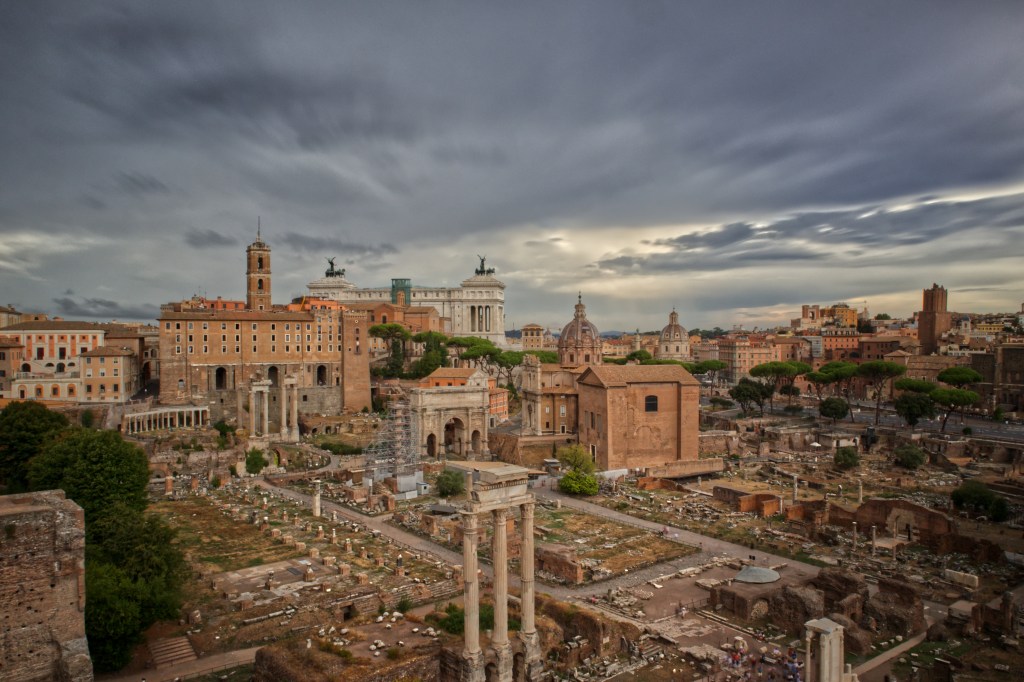
Best time: Early in the morning or late afternoon
Best vantage point: the upper levels of Palatine Hill
Photography tip: Use the columns and architectural elements as natural frames for your compositions. The warm light of golden hour brings out the rich tones in the ancient stones.
The sprawling archaeological complex offers endless compositional possibilities. While most tourists shoot the Forum from the overlook on Via dei Fori Imperiali, venture inside for more intimate perspectives. The layers of history become visible through your lens as Republican-era temples stand alongside imperial-era structures.
Colosseum

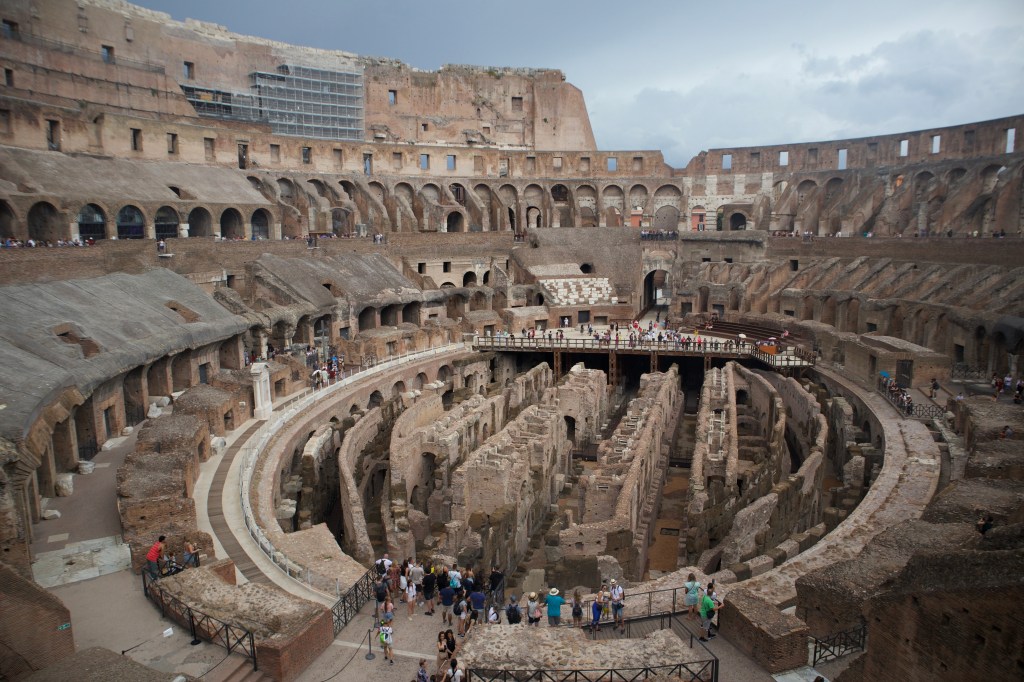
Best time: Sunrise for exterior shots without crowds; sunset for dramatic lighting
Best vantage point: From the hill at Via Nicola Salvi for a panoramic view. Head to the top of the stairs and then turn right to find a quiet, secluded spot to shoot from.
Photography tip: A wide-angle lens (16-24 mm) will help capture the immense size of this ancient structure.
While photographing the exterior is essential, don’t miss out on shooting the interior’s dramatic arches and passages. Pre-book tickets for early time slots to avoid the crowds. For a unique perspective, head to the rooftop of Hotel Colosseum for an elevated view.
Vatican City and St. Peter’s Basilica
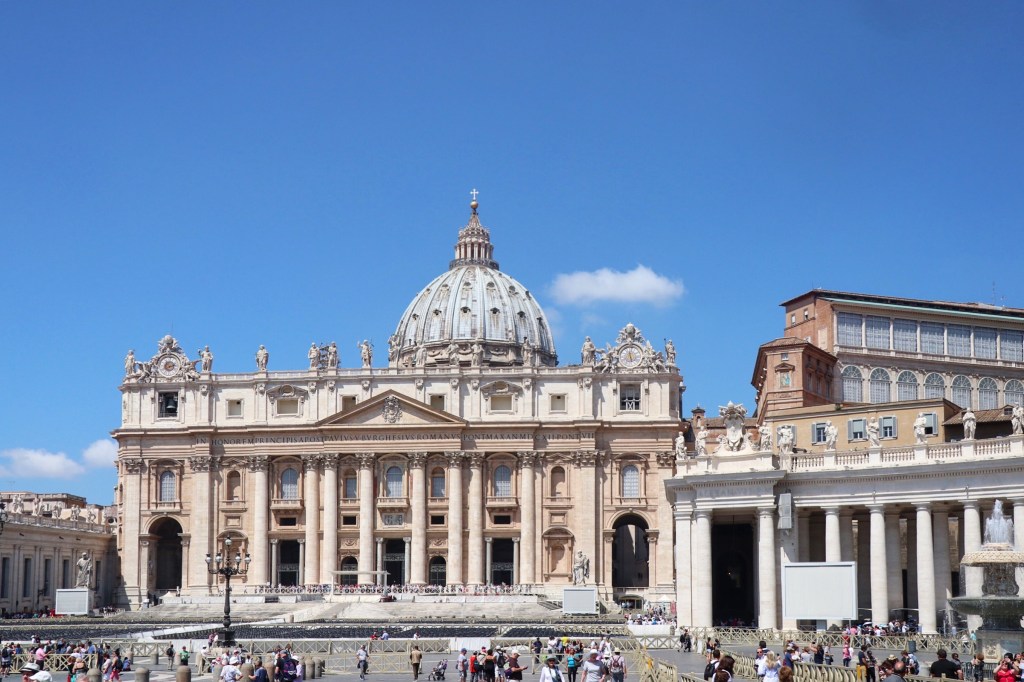
Best time: Tuesday to Thursday, early in the morning
Best vantage point: From St. Peter’s Square; from the dome of St. Peter’s
Photography tip: A versatile zoom lens will capture both the grand architecture and intricate details.
The Vatican Museums open at 9 a.m., but I’d suggest arriving by 8 a.m. if you want to be among the first inside. The spiral staircase in the Vatican Museums and the light beams in St. Peter’s Basilica are photographic highlights. For an unforgettable shot, climb the 551 steps to the top of St. Peter’s dome (or take the lift if your knees don’t fancy the climb) for a panoramic view of Rome and an overhead perspective of Bernini’s colonnades.
Trevi Fountain


Best time: Before 7 a.m. or after 11 p.m.
Best vantage point: The right side offers the best angle
Photography tip: Use a slow shutter speed (1/15 – 1/4 sec) to capture the silky motion of the water.
This baroque masterpiece is almost always crowded, making early morning your best opportunity to get clean shots. The fountain is beautifully lit at night, creating dramatic contrasts between the white marble and dark water. Consider using a small tripod for night photography here.
Spanish Steps and Piazza di Spagna
Best time: Early morning; In spring, when colourful flowers adorn the steps
Best vantage point: From the bottom looking up or from the Trinità dei Monti church at the top
Photography tip: Use people selectively in your composition to show scale.


In April and May, the sweeping, grand stairs of the Spanish Steps are covered in lilac and white azalea flowers, creating a sea of colour against the stone and turning the steps into one of the best Rome Instagram spots. Capture the symmetry of the staircase from below, with the Barcaccia fountain in the foreground, or photograph the sweeping views of Rome from the Trinità dei Monti church at the top. The fashionable streets surrounding the piazza also offer excellent street photography opportunities.
Hidden photographic gems
Quartiere Coppedè
Best time: Midday, when light filters through the trees
Best vantage point: The entrance arch at Via Tagliamento
Photography tip: Look for the whimsical architectural details that make this district unique.
This little-known architectural fantasy land, a short hop from the old city centre, is one of the most interesting districts of Rome. Designed by Gino Coppedè between 1921 and 1927, the buildings combine Art Deco, Baroque, Medieval and ancient Greek architectural elements. Don’t miss the Fountain of the Frogs in the central piazza.
Orange Garden (Giardino degli Aranci)
Best time: Late afternoon to sunset
Best vantage point: The terrace overlooking the city
Photography tip: Use the beautiful pine trees to frame your shots of St. Peter’s dome in the distance.
This elevated garden on the Aventine Hill provides one of the most romantic views in all of Rome. Don’t miss the famous keyhole at the Knights of Malta property nearby, through which you can photograph St. Peter’s dome perfectly framed within a garden hedge – one of the more interesting hidden gem sights of the city.
Ponte Umberto I
Best time: Sunset and blue hour
Best vantage point: Centre of the bridge
Photography tip: Use a tripod for low-light long exposures of the river and St. Peter’s Basilica.

This lesser-known, three-arch bridge was built in 1890s as the first bridge built after Italy was unified. It offers the perfect alignment with St. Peter’s dome and creates stunning reflection possibilities when the Tiber is calm. As the sun sets behind the Vatican, the sky often turns dramatic shades of pink and purple.
Technical tips for photographing Rome
Gear recommendations
- Walking-friendly camera bag: Rome is best explored on foot
- Wide-angle lens: Essential for architecture and tight streets (16-35mm is ideal)
- Mid-range zoom: Versatile for most situations (24-70mm)
- Lightweight tripod: For blue hour and golden hour shots
- Polarising filter: To manage reflections and enhance the blue sky
- Extra batteries: Long days of shooting will drain them quickly
Practical advice
- Travel light: Rome requires extensive walking, often on uneven cobblestones
- Be security conscious: Use a non-obvious camera bag in crowded areas
- Check opening hours: Many sites have seasonal schedules
- Respect religious sites: Photography may be restricted in certain churches
- Consider a rooftop bar: Many hotels offer access to spectacular elevated views
- Embrace the rain: Wet cobblestones create reflective surfaces for unique shots
Local transportation for photographers
While Rome’s historic centre is veery walkable, the city’s hills can be tiring. Consider the 48-hour Roma Pass for unlimited public transportation and museum access. For early morning shoots, if you don’t want to walk, pre-book a taxi through your hotel as the Metro doesn’t start running until 5:30 a.m.
Final thoughts
Rome wasn’t photographed in a day. Give yourself permission to return to locations at different times as the light changes. Sometimes the best images come from simply wandering the labyrinthine streets of Trastevere or Monti with your camera ready.
The real magic of photographing Rome lies in capturing both its monumental grandeur and intimate details – the centuries-old door handles, the shadows cast by ancient columns or locals going about their daily lives against backdrops that have stood for millennia.

Have you photographed Rome? Share your favourite photography spots and tips in the comments below.
 Postcards From Dan