Planning a day trip from Rimini to San Marino? Here’s your full guide — how to get there, where to ride the cable car, top sights and tips.
I was recently back in Ancona, Italy, for work, as I’m shuttling back and forth in my new role working with a publishing company. This year I’ve been to Italy three times already, but I fancied adding another country to my list of those I have stepped foot in. Since San Marino is only about 90 minutes from Ancona, I decided it would be a great weekend break, and set off to plant my size 12s in my 52nd country.
I was not disappointed.
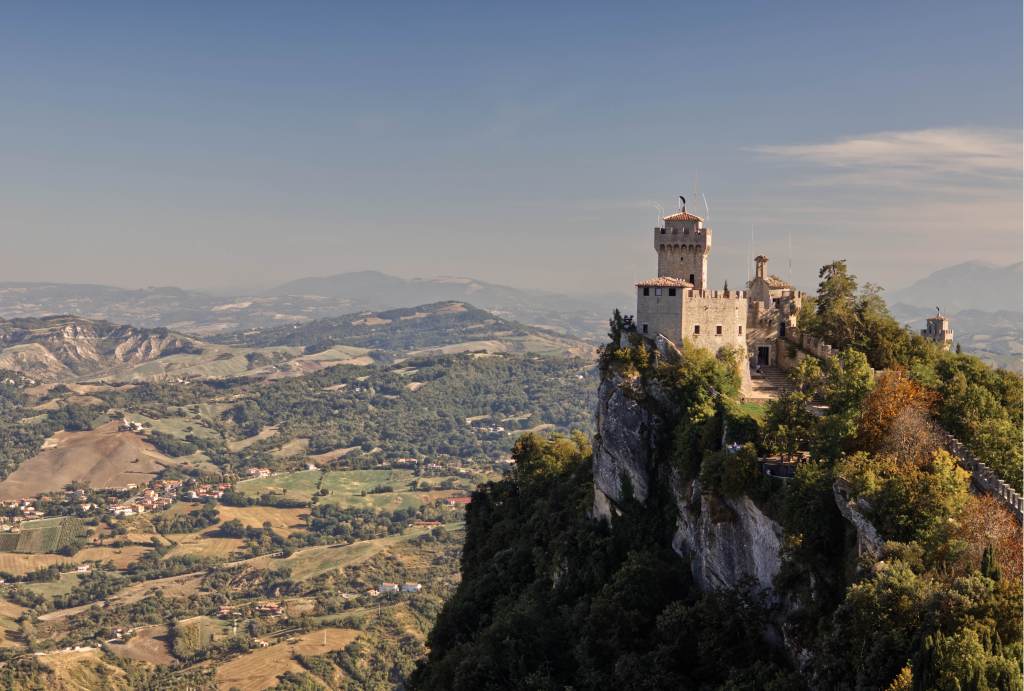
Entirely surrounded by Italy, San Marino is the fifth smallest country in the world and one of Europe’s most unique and fascinating destinations. It sits perched on Monte Titano, and the entire country covers just 61 square kilometres. It packs an incredible amount of history and charm into its diminutive size, and offers some of the most spectacular views I’ve ever seen.
San Marino is easily accessible from Florence, Bologna or Ancona. And it makes for a perfect day trip from Rimini, just under an hour away by road. The world’s oldest surviving republic offers visitors a chance to step back in time, explore medieval fortresses, wander cobblestone streets and enjoy panoramic views that stretch to the Adriatic Sea.

In this guide, you’ll discover how to get to San Marino from Rimini, the best things to do and see, insider travel tips, and why the San Marino cable car is an absolute must for any itinerary.
How to Get to San Marino from Rimini
As there’s no airport, the only way to get to there is by road. There are no border checks, as you’ll be covered by your entry into Italy, but you may need to take your passport to San Marino for your hotel if you decide to stay.
Reaching San Marino is straightforward, and Rimini is the best base for your journey. Here are the main options:
Bus from Rimini to San Marino
The easiest and most affordable way is by taking the Bonelli Bus, which connects Rimini with San Marino several times a day.
Check the official Rimini to San Marino bus timetable.
Tickets cost €7 each way and take around 50 minutes. You can buy a ticket from the tabacchi nearby, or you can buy online.
When you exit Rimini station, cross the street right outside, and turn right. A couple of hundred metres along the road is Hotel Napoleon and the bus stop.
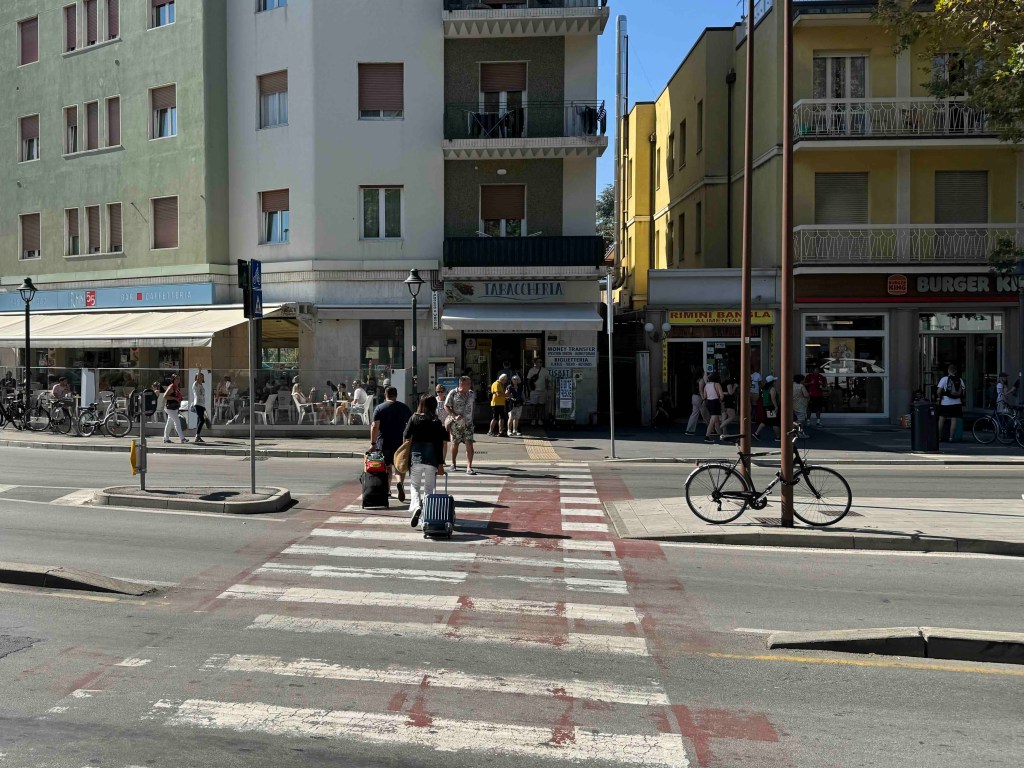
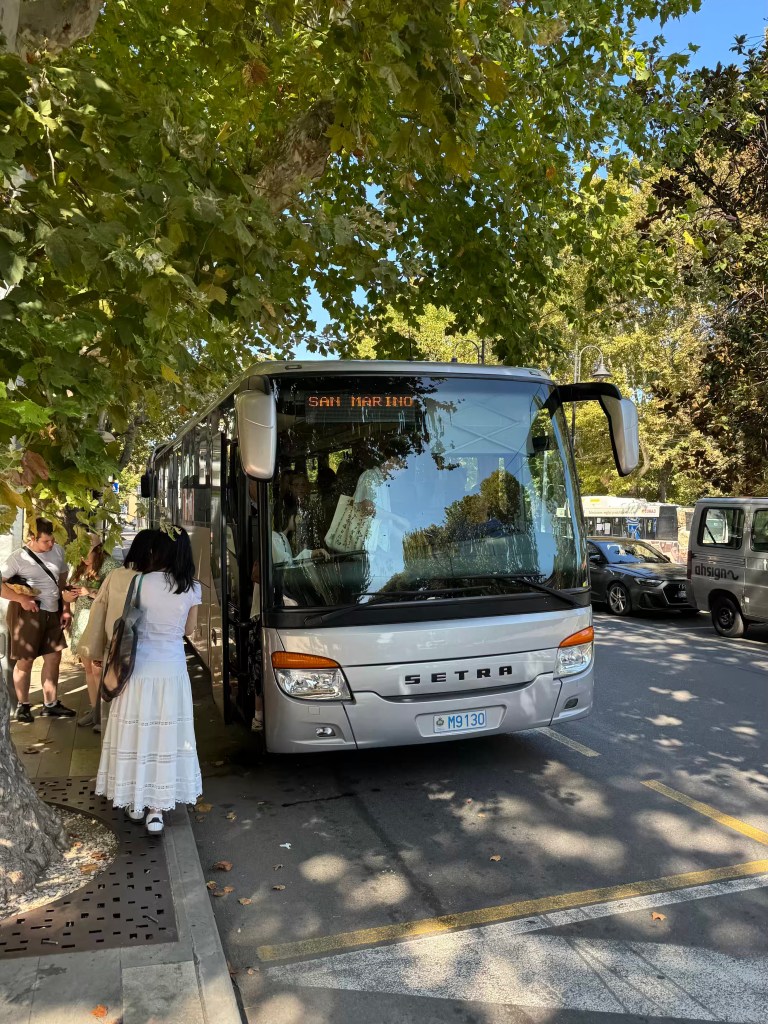
I bought online, and the ticket advised that it could only be used on the bus and time you had booked. I chose the 11.45 am bus and I was at the stop for 11.30 and the bus was already almost full. The bus departed sooner than 11.45, but the driver told waiting passengers that there would be several buses for the 11.45 service and to wait for the next one, so if arrive at the stop and see a bus departing, chances are you won’t have missed it.
- Departure point: Outside Hotel Napoleon, across the street from Rimini train station.
- Duration: About 50 minutes.
- Cost: Around €7 each way.
- Tickets: Available from the driver, online or at authorized shops near the bus stop.
In San Marino, the buses park at the P2 bus station. If you haven’t bought online, you can buy your return ticket from the little blue kiosk inside the bus station. You can also buy tickets for the road train to the old city there.

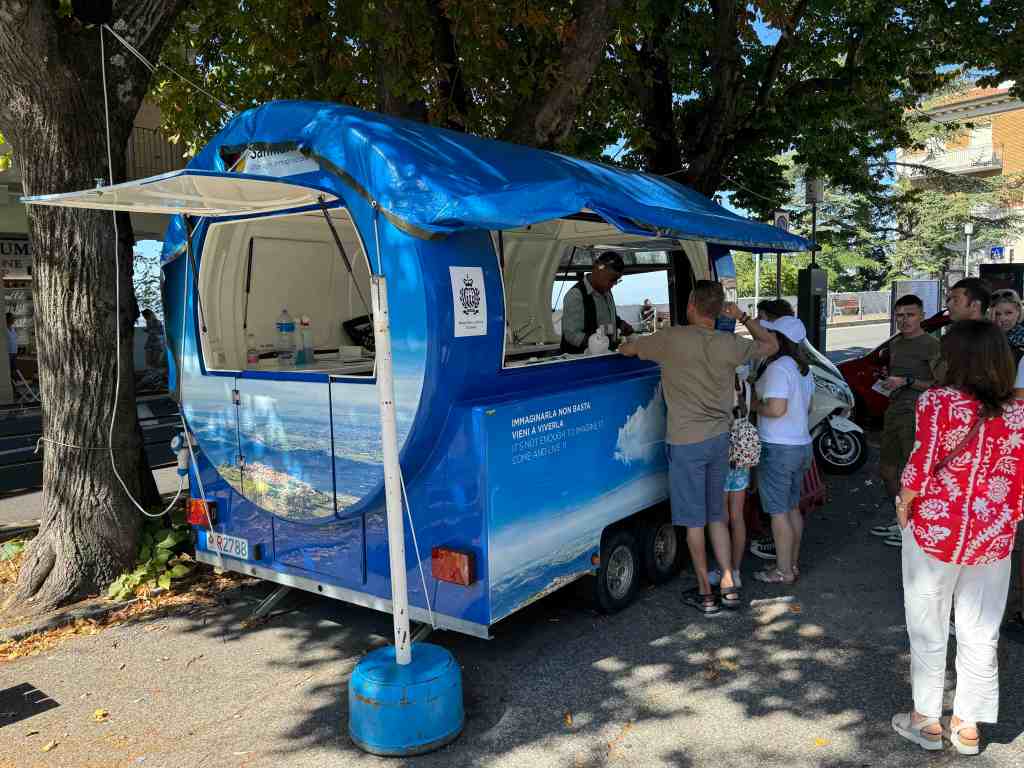
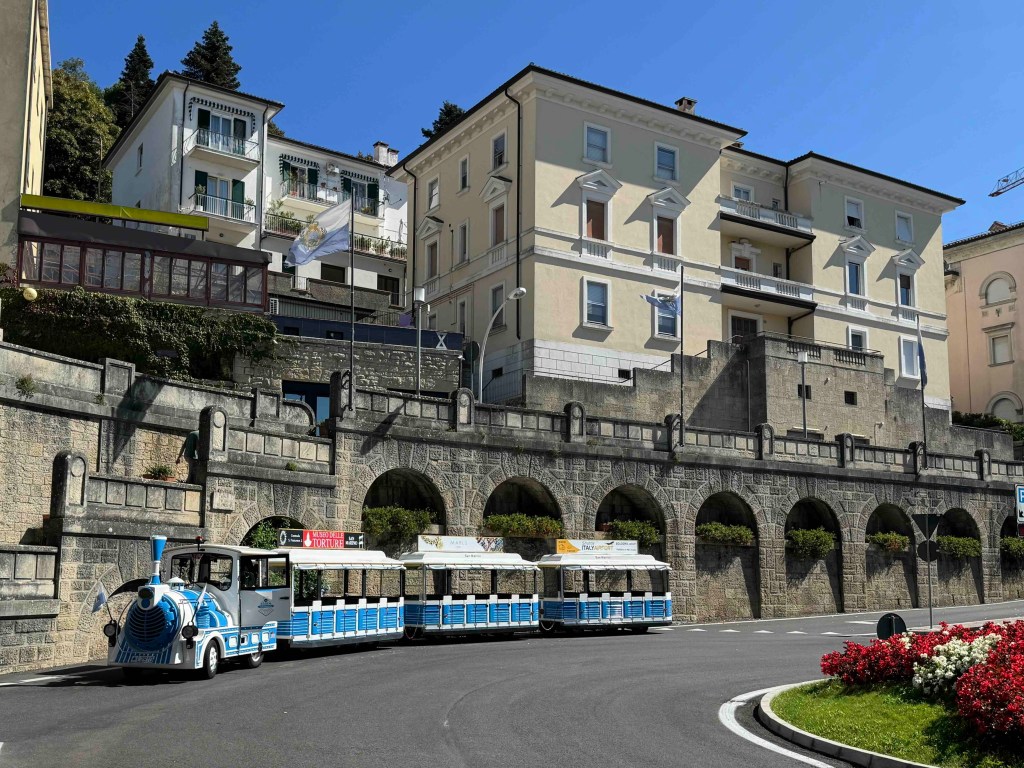
The journey itself is very scenic, passing through the centre of Rimini and out into rolling hills and villages before climbing up to Borgo Maggiore and arriving in the old city.
Driving to San Marino
Renting a car in Rimini gives you freedom to explore at your own pace. The drive takes 40–50 minutes, and roads are well-marked.
- Parking is available near Borgo Maggiore or in several car parks below the old city.
- From parking areas, you can take the cable car or walk up into the city.
Driving also makes it easy to explore beyond the old town, such as countryside viewpoints and less-visited villages.
Exploring San Marino’s Old Town
The historic centre of San Marino is a UNESCO World Heritage Site, and as cliché as it sounds, it really does like stepping into a medieval storybook. With its stone walls, narrow alleys and commanding towers, the old town is pretty compact (and pretty busy when it’s tourist season), but packed with things to see and do.
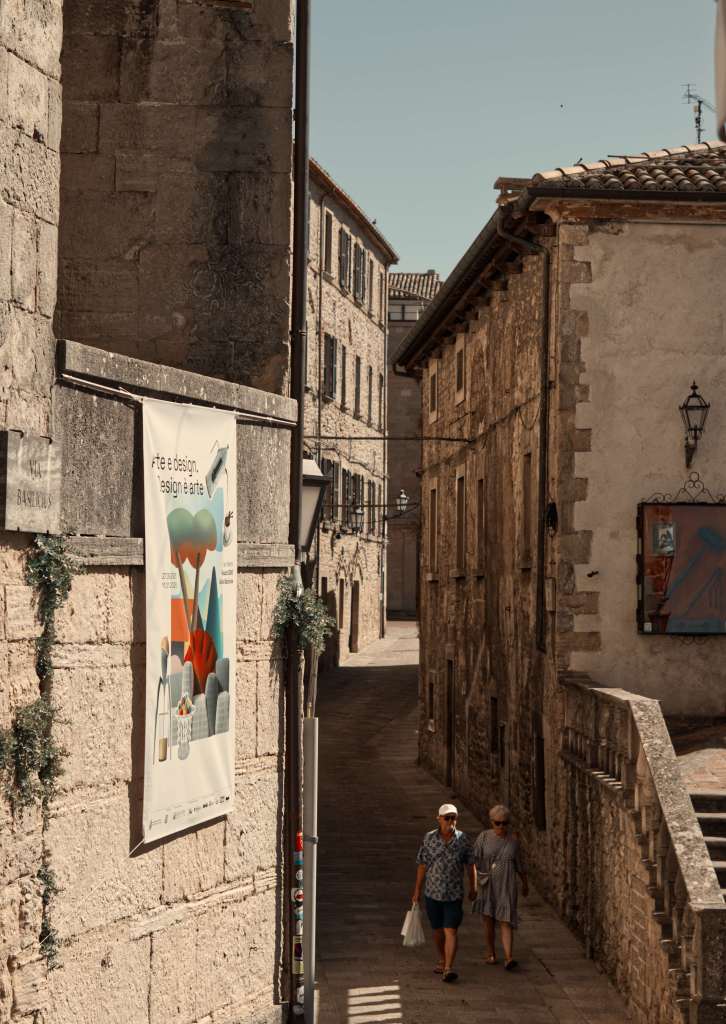

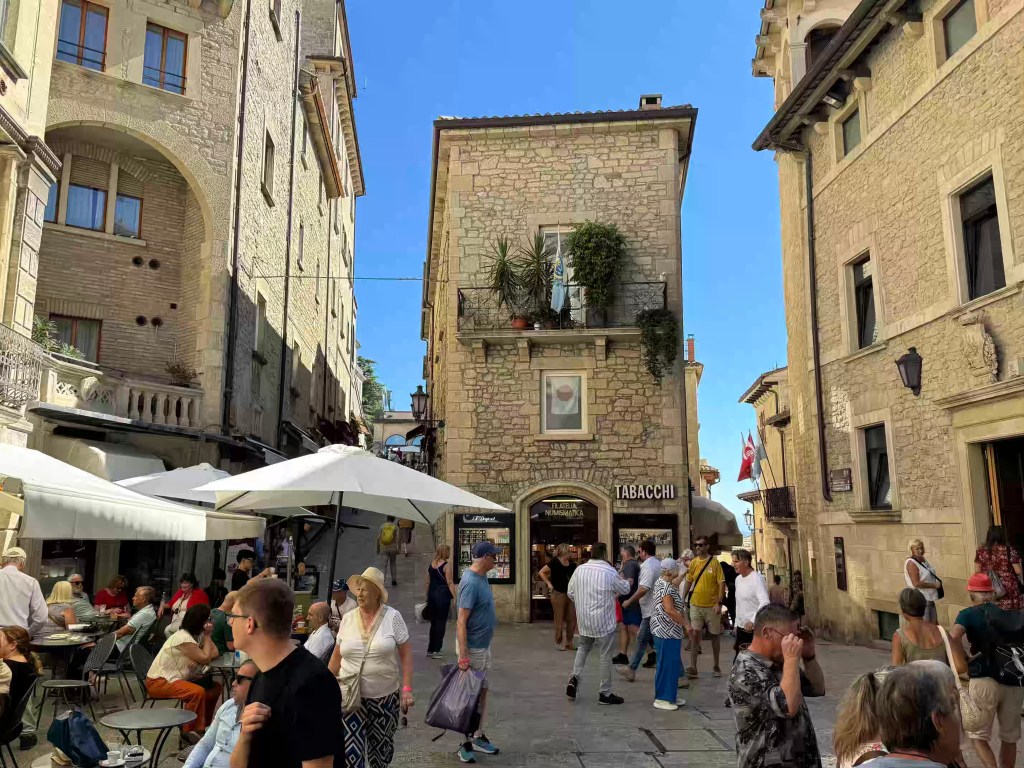

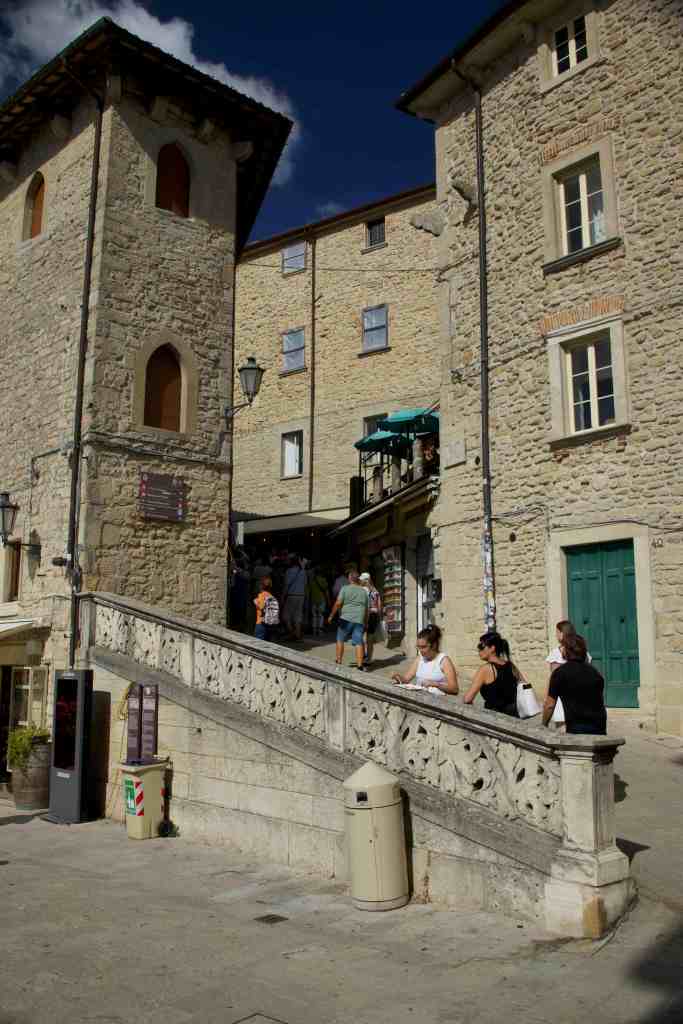
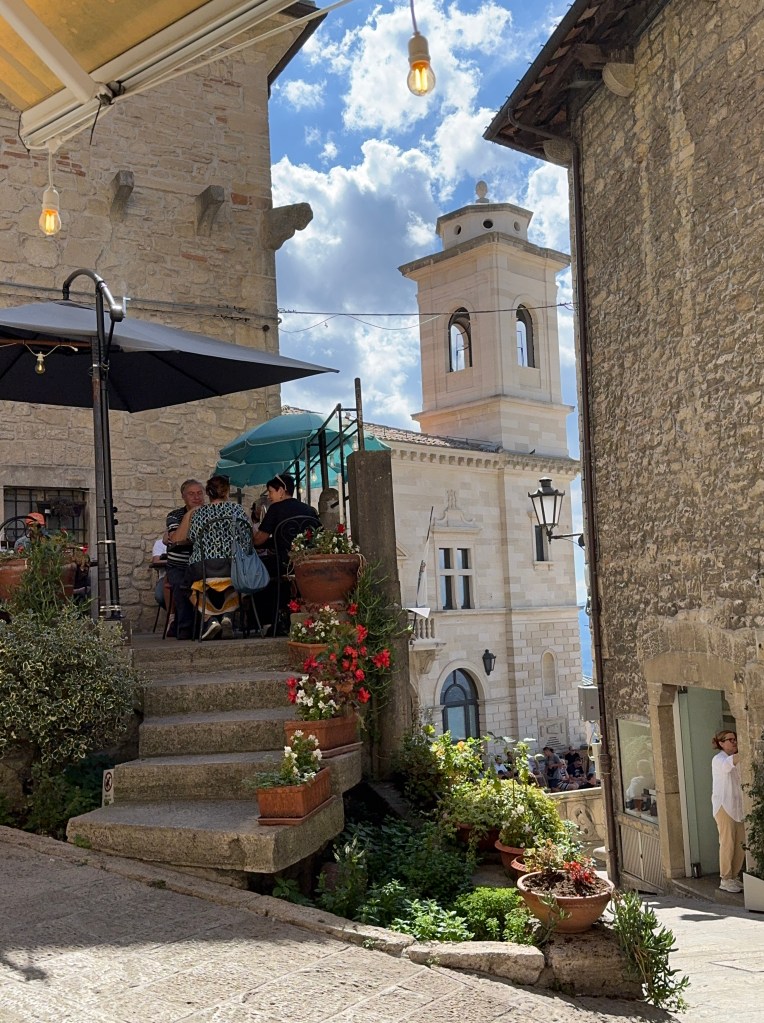
If you’re a people watcher like me, you won’t mind the crowds, and you’ll also never tire of looking at the stunning views of the surrounding hills and countryside. I visited towards the end of September and I wasn’t overly crowded, but it was busy.
To see more for yourself, check my San Marino Old Town walking tour on YouTube.
Piazza della Libertà and the Palazzo Pubblico
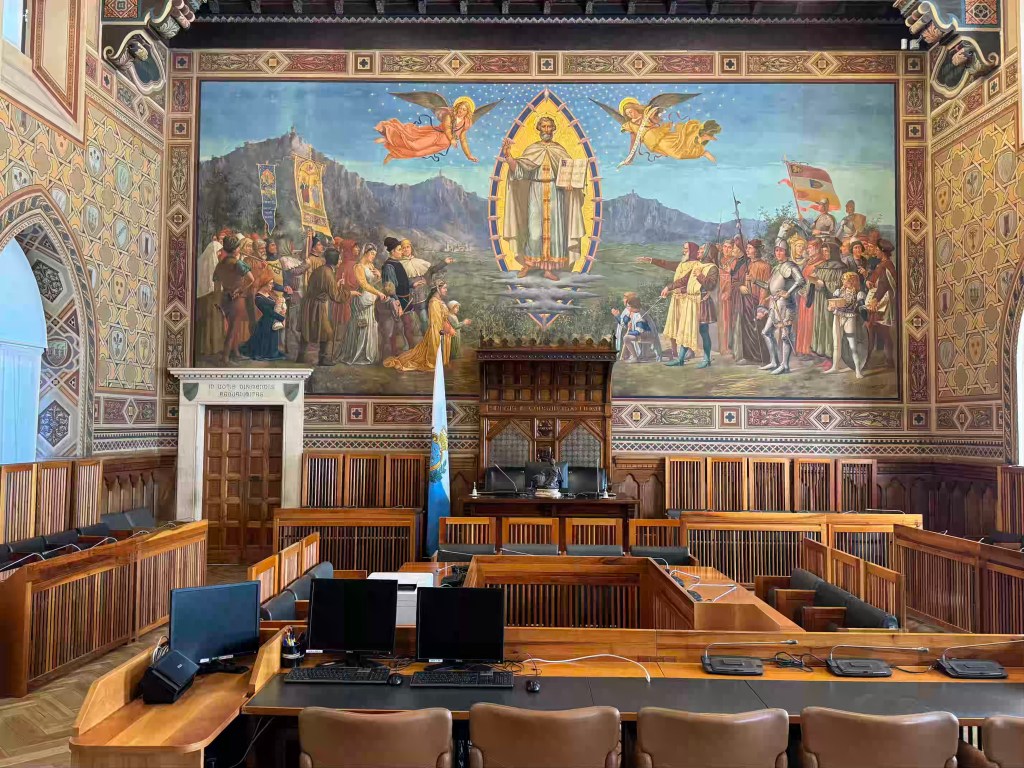
The main square, Piazza della Libertà, is the beating heart of San Marino. Here you’ll find the Palazzo Pubblico, the seat of government where official state ceremonies take place. Its clock tower, crenellated roofline and neo-Gothic windows make it one of the country’s most photographed buildings. I personally loved the intricate carvings on the doors, which feature scenes from the history of San Marino.

If you time your visit right, you can watch the Changing of the Guard. Head inside and upstairs and visit the state room, adorned with a stunning mural behind the head of state’s chair.
The Three Towers of San Marino
San Marino is famous for its Three Towers perched along the ridges of Monte Titano, and for many visitors this is one of the main reasons to come to San Marino. The towers certainly were the draw for me, as I wanted to photograph them perched high up on the hills.
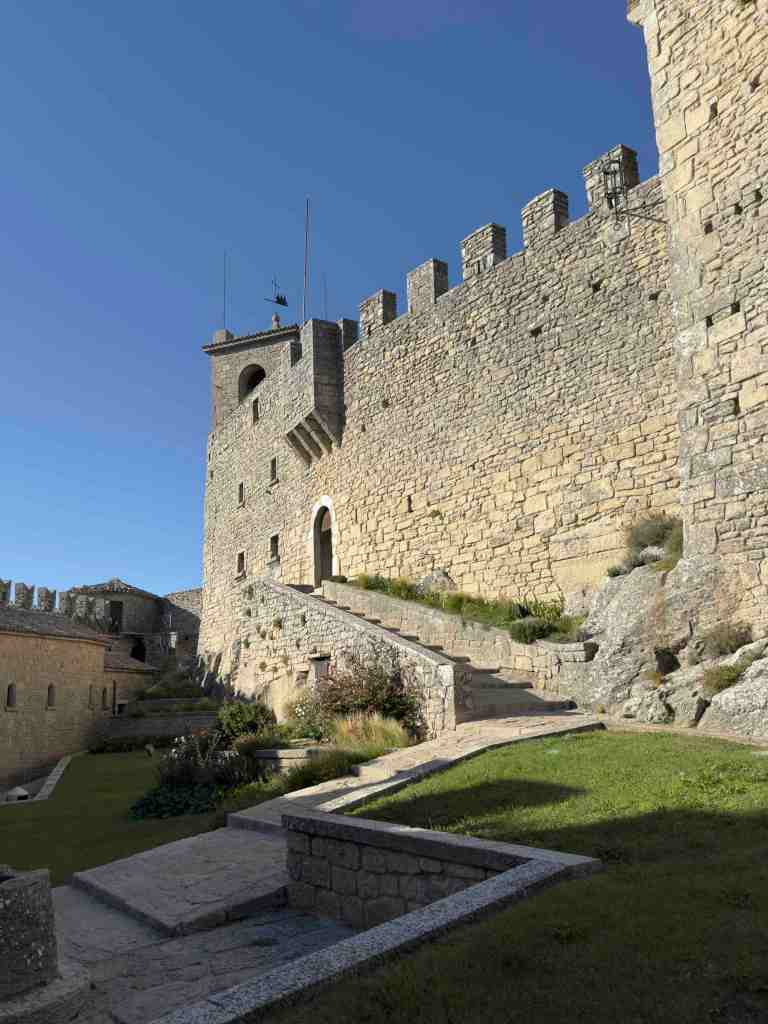
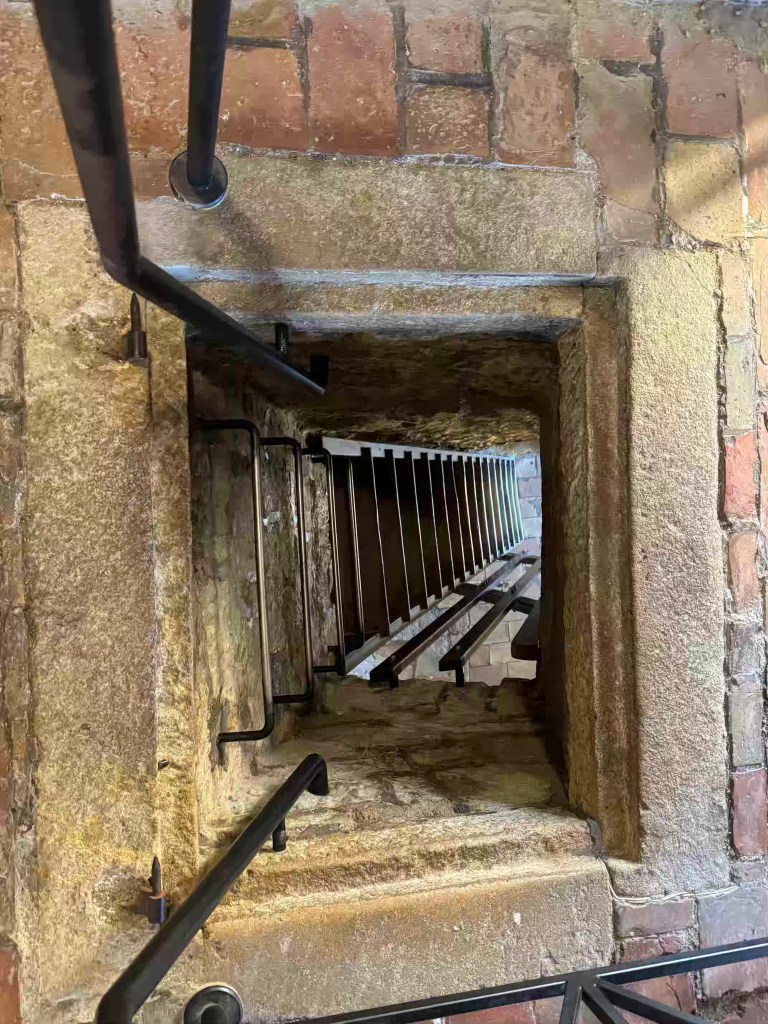
- Guaita Tower: The oldest and most iconic, dating back to the 11th century. Visitors can climb its ramparts for incredible views. Note that to get up to the top you need to climb a very steep wooden and metal staircase which ascends through a very tight hole in the floor/ceiling – I had to take my backpack off as there was no way I was going to be able to squeeze through the hole with it on. Due to this, queues to get up and down can be quite long, but I was there at the end of the day and didn’t encounter this.
- Cesta Tower: Built in the 13th century, this tower houses the Museum of Ancient Weapons, with a fascinating collection of medieval arms. From just below, you get a lovely view of the Guaita Tower on top of the cliff.
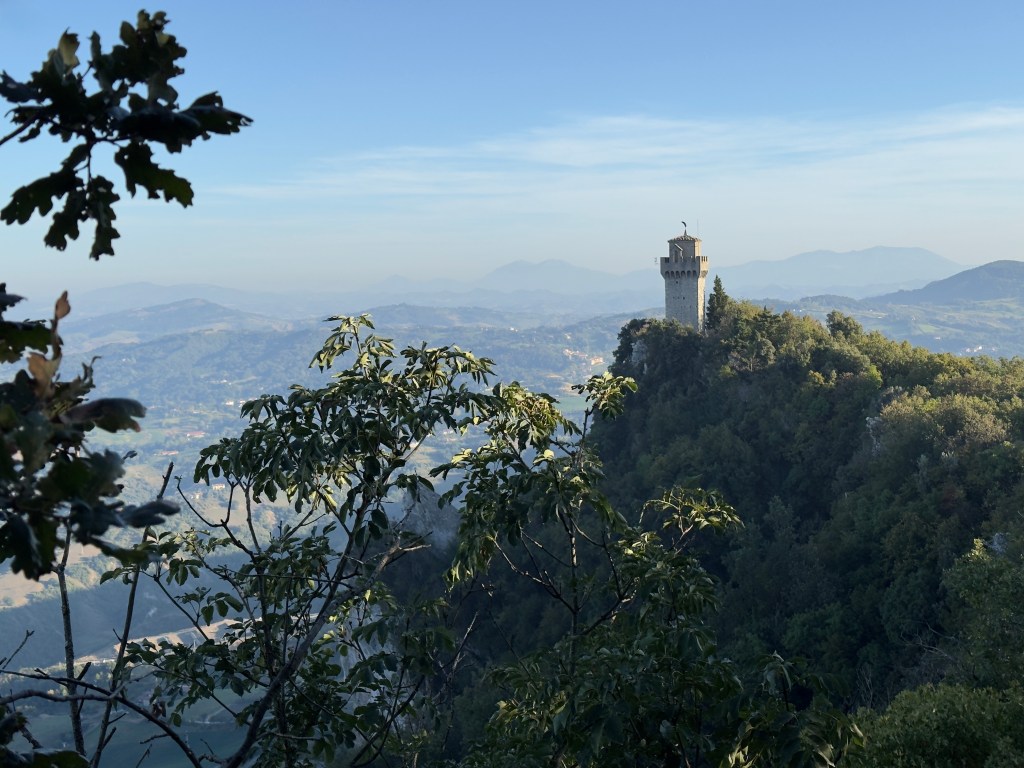
- Montale Tower: The smallest and least visited. It’s not open inside, but it makes a great photo stop along the path that runs along the top of the hill.

Walking the Passo delle Streghe (Witches’ Path)
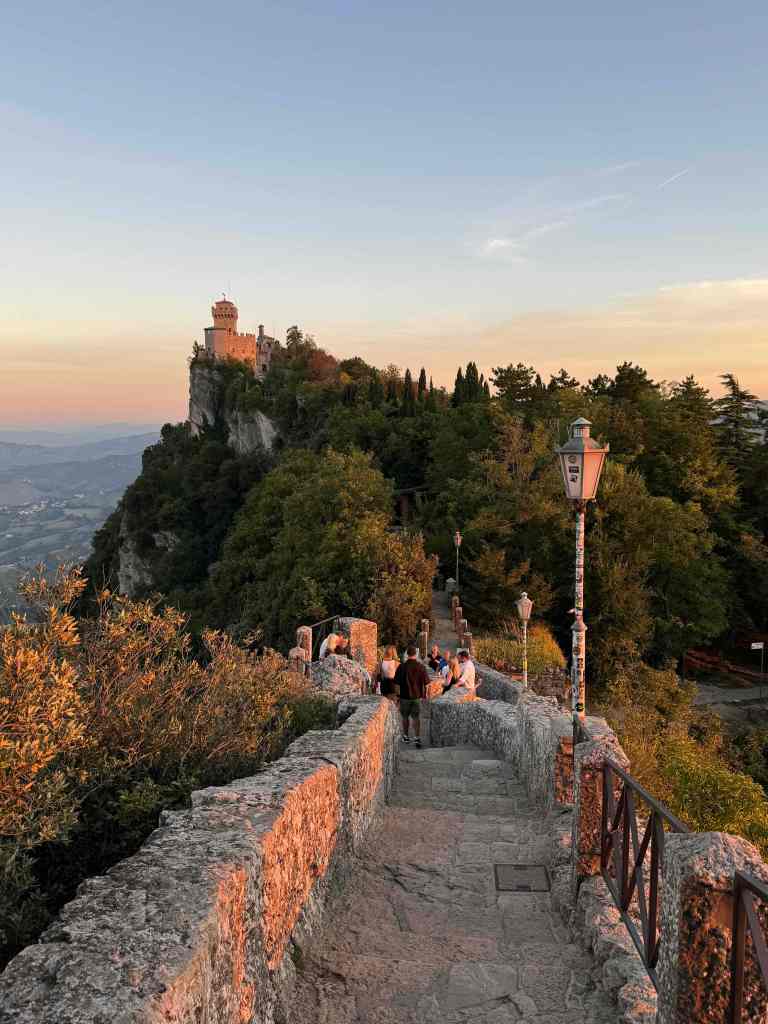
The three towers are linked by the Passo delle Streghe, an incredibly scenic walkway across the hilltop offering panoramic views of both sides of Monte Titano. It’s one of the most memorable parts of visiting San Marino, especially at sunset when the light paints the hills and Adriatic Sea in golden tones.

Basilica of San Marino
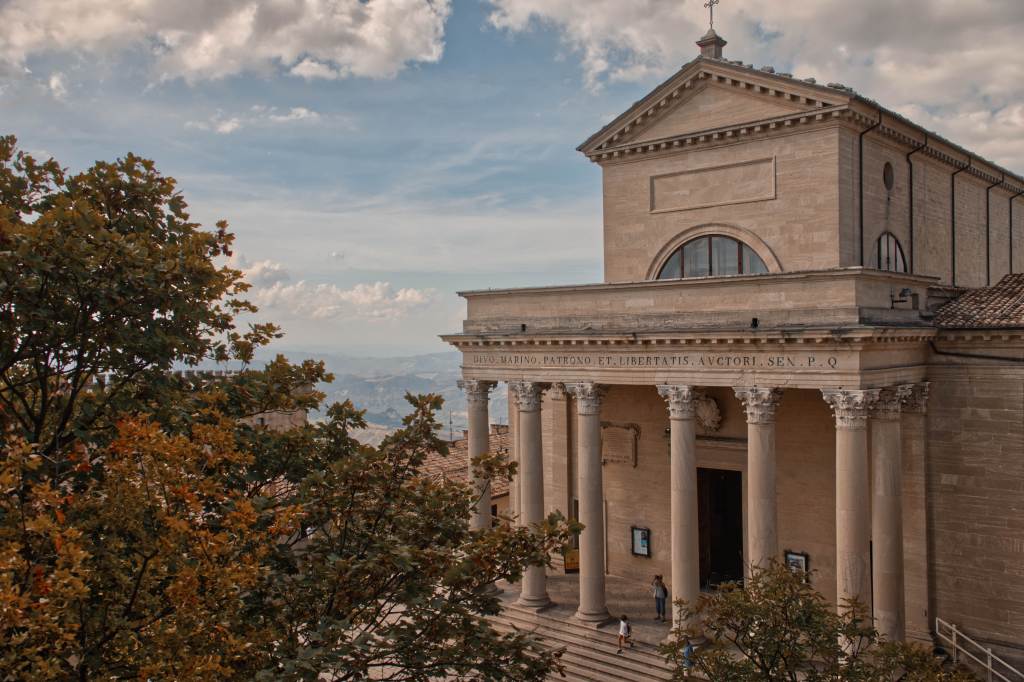
The Basilica di San Marino, built in the 19th century, is a neoclassical gem dedicated to Saint Marinus, the country’s founder. With tall Corinthian columns, marble altars and a peaceful atmosphere, it’s a place of calm reflection and history. On the weekend I visited a wedding was taking place, and what a place that would be to get married.
Don’t miss stepping inside – the cool, quiet interior offers a nice contrast to the bustling piazzas. And for a stunning view of the Basilica with stunning views across the countryside, head up to Orti Borghesi, a small park that overlooks the church.
Ride the San Marino Cable Car
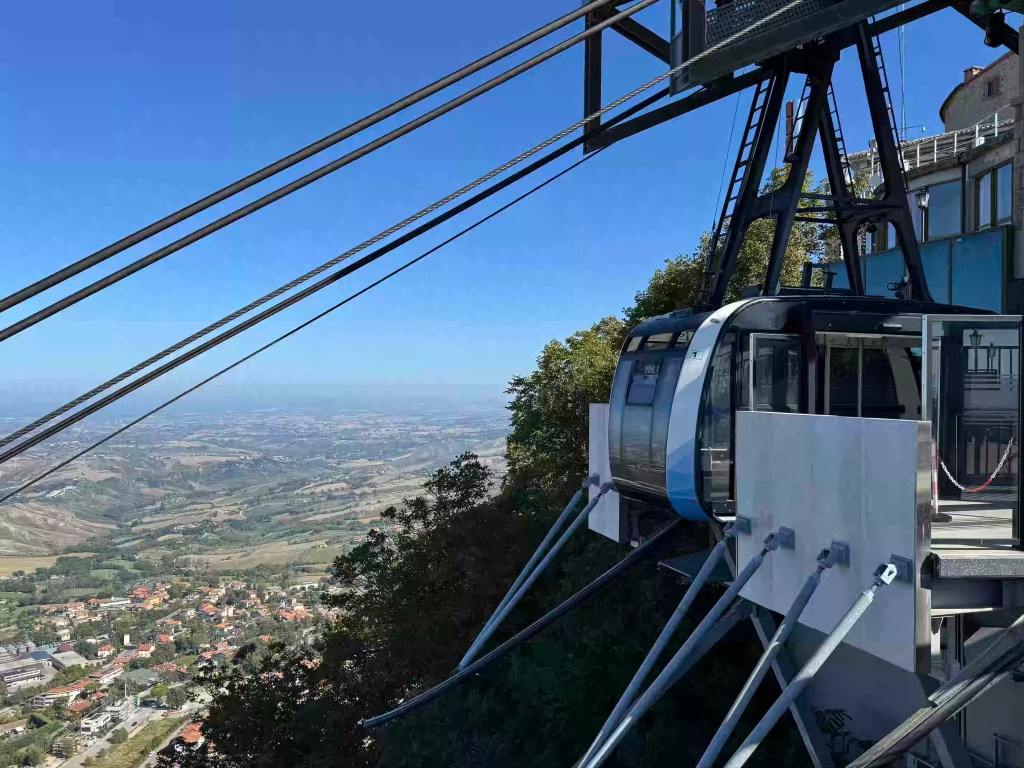
Borgo Maggiore to the Old City
The San Marino cable car connects the town of Borgo Maggiore with the old city. The ride takes just two minutes, but it’s one you won’t forget. The cable car runs every 15 minutes and costs €3 one way and €5 return.
Scenic Views from the Cable Car
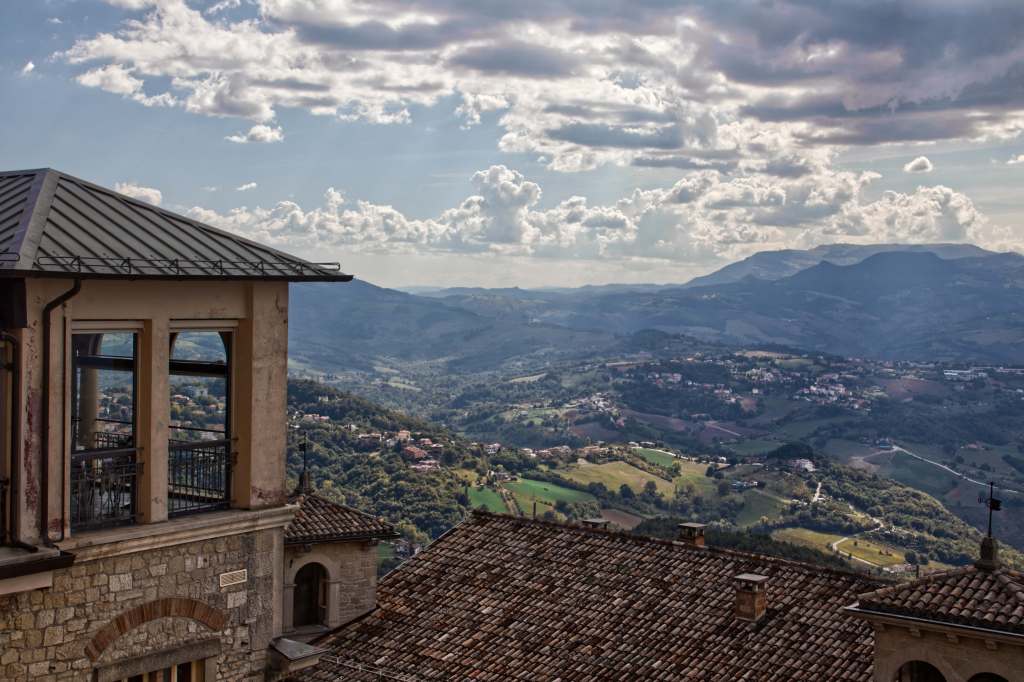
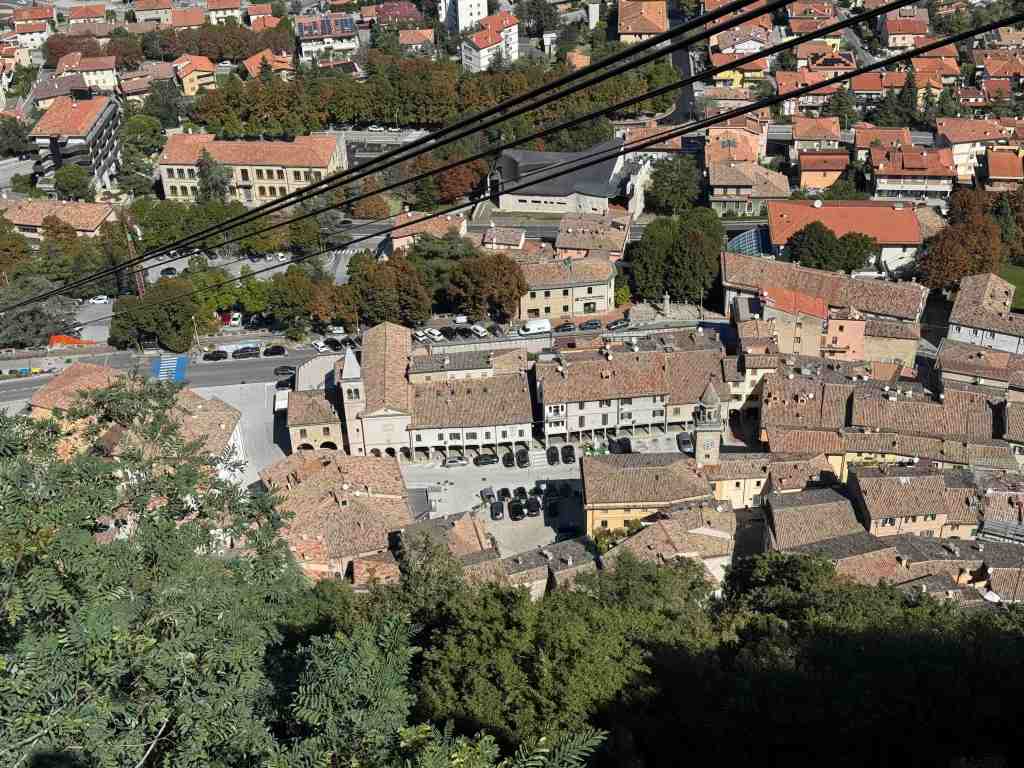
From the cable car, you’ll see rolling green hills, terracotta-roofed villages, and on a clear day, you’ll see the Adriatic coastline. From the old city down to Borgo Maggiore, the descent is initially quite steep, but levels out. On the way up, the views across the rooftops of Piazza Grande are quite something.
Museums and Culture in San Marino
San Marino may be small, but its museums offer big cultural value.
Consider buying the San Marino Musei Pass for €11 (€8 concessions for over 65s). This allows you access to seven of the State museums:
- Prima Torre (First Tower, or Guaita Tower)
- Palazzo Pubblico
- Museo delle armi antiche (Museum of Ancient Weapons)
- Museo di Stato (State Museum)
- Pinacoteca San Francesco (San Francesco Picture Gallery)
- Galleria Nazionale (National Gallery)
- Museo del Francobollo e della Moneta (Stamp and Coin Museum)
State Museum of San Marino
Located in Palazzo Pergami Belluzzi, the State Museum holds archaeological finds, art and historical objects that trace San Marino’s history.
Other museums include:
Museum of Curiosities
A lighthearted option, the Museum of Curiosities showcases strange inventions, unusual facts, and quirky items from around the world.
Wax Museum
The Wax Museum features over 100 figures, from Napoleon to Garibaldi. It’s fun, family-friendly, and offers quick entertainment between sightseeing stops.
Shopping in San Marino
Duty-Free Shopping
San Marino is a duty-free zone, so shopping is a big draw. Perfume, electronics, leather goods, and clothes often cheaper than in Italy. The old city is crammed full of shops selling perfume, sunglasses, clothes, knives and weapons and leather items.
For designer goods and mall-like shopping, consider a trip the San Marino Outlet Experience, a mall with over 40 top-brand stores. Bonelli buses make a stop here along the route to and from Rimini.
Stamps and Coins as Souvenirs
San Marino is also famous for its stamps and coins, prized by collectors worldwide. Even if you’re not a collector, they make unique souvenirs of your visit.
Food and Drink in San Marino
Food in San Marino is heavily influenced by nearby Emilia-Romagna but retains its own character.
Local Dishes to Try
- Torta Tre Monti: A wafer cake layered with chocolate and hazelnut cream, representing the Three Towers.
- Nidi di Rondine: aka ‘swallow’s nests’ – baked pasta rolls filled with ham, cheese and sauce.
- Piadina: A flatbread grilled with fillings like cheese, prosciutto or vegetables.
San Marino Wines
Local wines are excellent companions to a meal:
- Biancale – a crisp white.
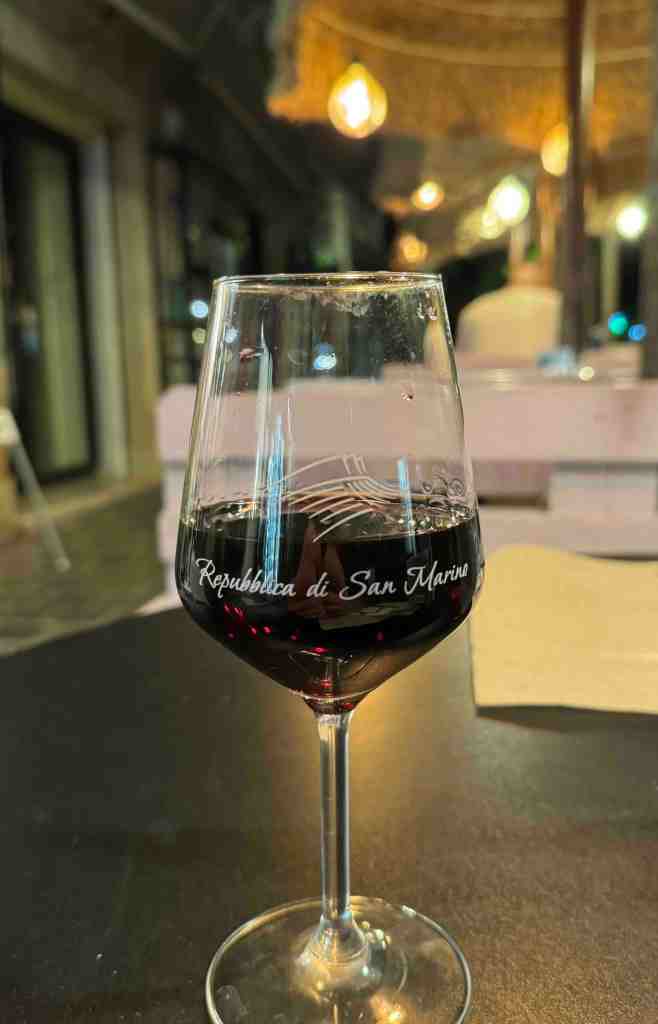
- Sangiovese di San Marino – a bold, full-bodied red.
Cafés and Trattorias
Throughout the old town, you’ll find family-run trattorias and cafés. Many have terraces with sweeping views, which make for a perfect relaxed lunch or evening aperitivo.
Suggested One-Day Itinerary for San Marino
Morning:
- Take the bus or drive from Rimini.
- Arrive at Borgo Maggiore and ride the cable car up.
- Start in Piazza della Libertà and visit the Palazzo Pubblico.
Midday:
- Walk the Passo delle Streghe between the towers.
- Visit Guaita and Cesta Towers for history and views.
- Stop for lunch at a trattoria – try a piadina or Nidi di Rondine.
Afternoon:
- Visit the Basilica di San Marino.
- Browse the old city shops for stamps, coins or duty-free goods.
- Explore a museum – State Museum or Museum of Curiosities.
Evening:
- Enjoy a coffee or glass of wine with a view.
- Take the cable car back down to Borgo Maggiore.
- Return to Rimini by bus or car.
This simple itinerary ensures you see the highlights without feeling rushed.
Practical Travel Tips for San Marino
Best Time to Visit San Marino
Spring (April–June) and autumn (September–October) are ideal, with pleasant temperatures and fewer crowds. Summer is lively but hot, while winter is quieter with fewer visitors.
Currency and Language
San Marino uses the euro (€). The official language is Italian, but English is widely spoken in tourist areas.
How Long to Spend in San Marino
A day trip is enough for highlights, but an overnight stay leaves you with the old city to yourself after all the crowds have left, though take note that on my trip many restautants and shops appeared to be closed by 8 p.m.
Despite this, the evening in San Marino is magical – the sunset is magical, and the illuminated towers and quiet streets are empty, leaving you to feel the whole city belongs to only you.

Why Visit San Marino?
A Storybook Destination
San Marino is a fairytale setting – with its medieval towers, cobblestone streets and mountain-top vistas, it’s easy to feel like time has stood still.
Perfect for Slow Travel and Walking Tours
For walking tour lovers, photographers and slow travellers, San Marino is a dream. Every corner has a view, every alley leads to a hidden gem and every step immerses you deeper into the republic’s history.
Whether you’re visiting as a day trip from Rimini or staying longer, San Marino is a destination that proves great things come in small packages.
Frequently Asked Questions about Visiting San Marino
Is San Marino worth visiting?
Absolutely. San Marino is one of Europe’s most unique destinations, offering medieval towers, stunning panoramic mountain views, rich history and a peaceful atmosphere. It’s small enough to explore in just a day, but rewarding enough to stay overnight and see more the next day.
Do you need a passport to visit San Marino?
There are no border controls between Italy and San Marino, so you don’t need to show your passport when entering (you’ll be covered by your entry into Italy, since the only way into San Marino is from within Italy). However, you will need it for your hotel if you decide to stay the night.
If you want a fun keepsake, you can get your passport stamped at the San Marino tourist office for €5.
How long should I spend in San Marino?
A full day is enough to see the main highlights: Piazza della Libertà, the Three Towers, Basilica di San Marino and the cable car. Note that some of the attractions close at 5 pm in the winter season (from mid-September), so you would need to arrive early in the morning.
Staying overnight allows you to enjoy the old town after the day-trippers leave.
What is the best way to get to San Marino from Rimini?
The easiest option is the Bonelli Bus from Rimini train station, which takes about 50 minutes. You can also drive (40–50 minutes) or book a guided tour.
Is San Marino walkable?
Yes. The historic centre is compact and best explored on foot. There is very little car traffic in the city, so most of your time there will be spent on foot.
Be prepared for uphill walks and cobblestone streets, but the distances are short and manageable and if you take things slowly.
What is San Marino famous for?
San Marino is famous for being the world’s oldest republic, its Three Towers on Monte Titano, duty-free shopping and the stunning panoramic views across Italy to the Adriatic coast.
What language do they speak in San Marino?
The official language is Italian, but English is widely spoken in tourist areas.
Can you use euros in San Marino?
Yes, San Marino uses the euro (€). It also issues its own euro coins, which are popular with collectors.
What food should I try in San Marino?
Don’t miss Torta Tre Monti (layered wafer cake with chocolate and hazelnut cream), Nidi di Rondine (baked pasta rolls) and local wines like Sangiovese di San Marino.
Want an overview of all of above? Check out my San Marino travel vlog.
Have you been to San Marino? What was your favourite tower?
 Postcards From Dan