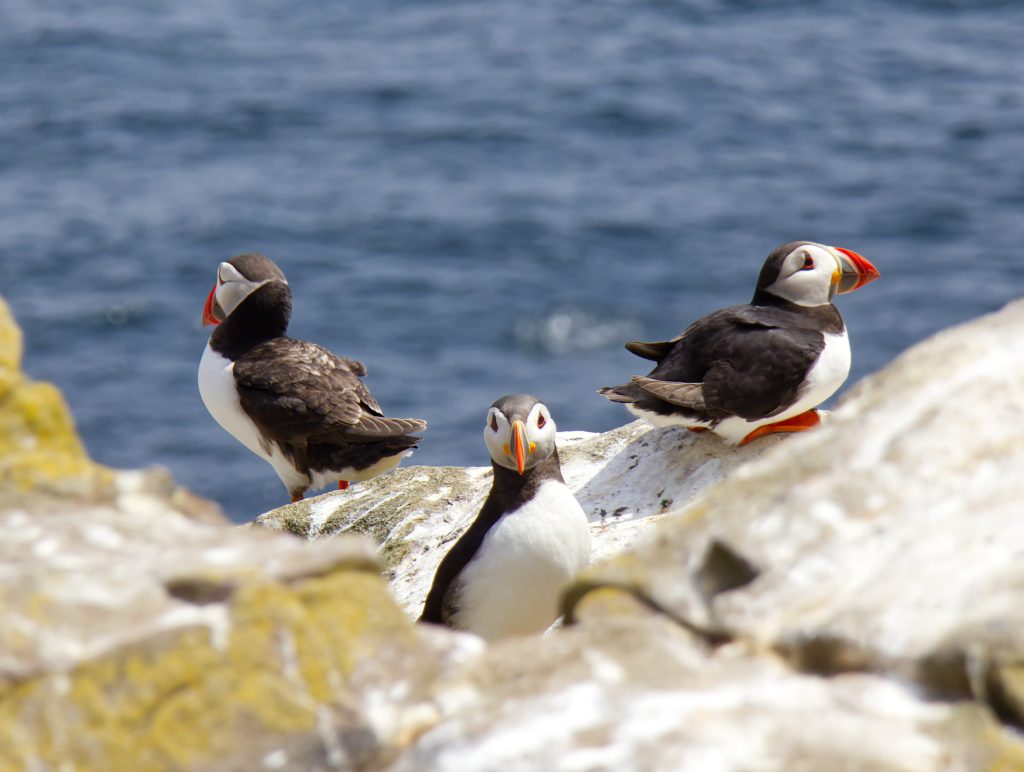
If you want to see puffins in the UK, few places are as spectacular as the Farne Islands in Northumberland.
Every year, from April to the end of July, thousands of seabirds arrive on these small islands a few miles off the Northumberland coast to breed, including one of Britain’s most loved birds, the Atlantic puffin.
Being a photography enthusiast, visiting the Farne Islands has been high on my list for a few years now, as I wanted the chance to photograph these curious birds. So I got a week off work at the end of June, I couldn’t think of a better place to do with my time off.
Leaving from Seahouses harbour, I joined Serenity Farne Island Boat Tours on a boat trip out to this incredible wildlife destination, where I saw puffins, seals, guillemots, Arctic terns and countless other seabirds.
The Farne Islands are a place where wildlife completely takes over. The skies are filled with birds, the rocks are covered with nesting colonies and the surrounding waters are home to grey seals.
If you are planning a visit, here is everything you need to know about seeing puffins on the Farne Islands.
What are the Farne Islands?
The Farne Islands are a group of small islands located just off the coast of Northumberland, close to the seaside town of Seahouses.
The islands are famous for their incredible wildlife – so much so that David Attenborough declared them his favourite place in the UK to see nature – and are managed as an important nature reserve.
They are home to one of the largest seabird colonies in England, with thousands of birds arriving every year to nest.
Among the many species you can see are:
- Atlantic puffins
- Arctic terns
- guillemots
- razorbills
- kittiwakes
- shags
- grey seals
The islands are also connected with the history of Saint Cuthbert, who lived as a hermit on Inner Farne during the seventh century.
How do you visit the Farne Islands?
The easiest way to visit the Farne Islands is by taking a boat trip from Seahouses.
Several local boat companies operate trips from Seahouses harbour, taking visitors out around the islands to experience the wildlife from the sea, with the tours lasting between two and three hours. Parking is available at harbour and across the road.
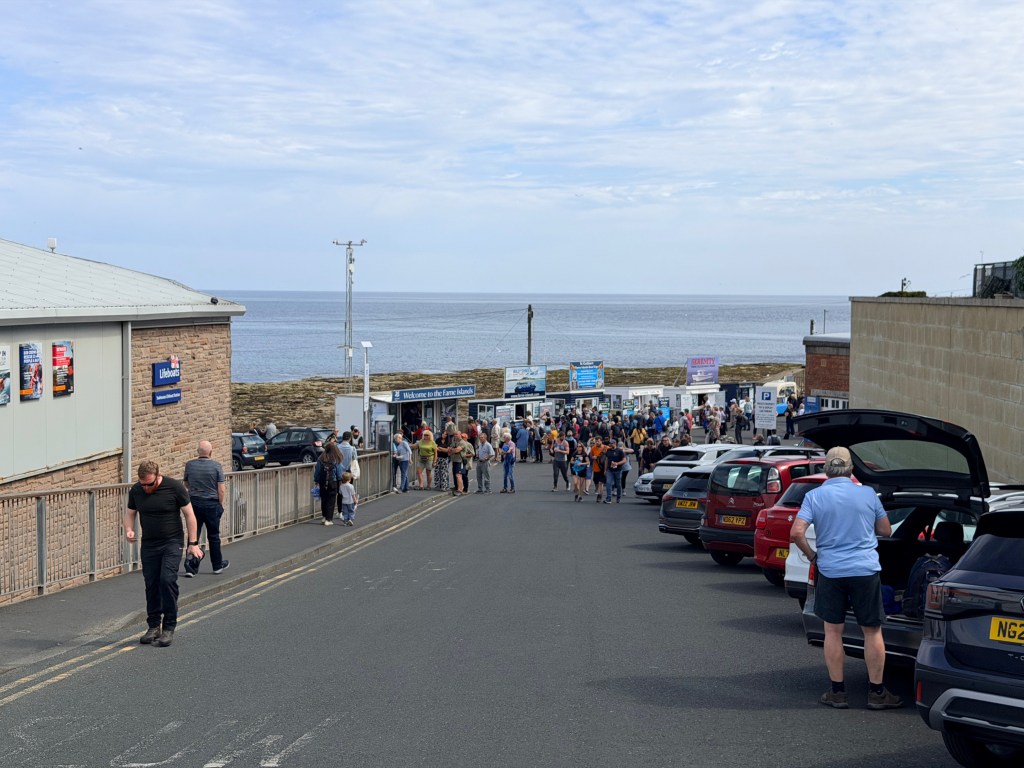
I joined a morning cruise with Serenity Farne Islands Boat Tours, which offered a fantastic opportunity to see the islands, seabirds and seals up close.
It’s advisable to book a ticket online during the busy period as the boats can book up fast, or you can buy tickets from their booking offices at Seahouses harbour. Serenity’s tour is £34 for adults and £26.50 for children.
If you book the Inner Farne tour, which is the tour that lets you get off the boat on Inner Farne and get up close with the puffins, you also have to buy a ticket from the National Trust before you can board the boat. It’s £17 for adults and £8.50 for children during the peak months of May, June and July.
Members, of course, don’t need to do this, but you still have to show your membership at the National Trust ticket office at the harbour and get your boat ticket stamped.
You will be advised to ensure you have a hat or a hood for your trip to the island – more on that below.
The exact route depends on conditions, tides and wildlife activity, but most trips include:
- cruising around several of the islands
- viewing seabirds from the boat
- seeing grey seals in the water
- visiting Inner Farne during landing trips
The great thing about the Serenity tour is they use catamarans for a more stable cruising experience, and the boat driver provides an interesting and useful commentary throughout the trip – for example, I learned that a seal cow often becomes pregnant just days after birthing a pup, and can spend approximately thirty years of her life being pregnant. Good job labour only lasts about 60 seconds…
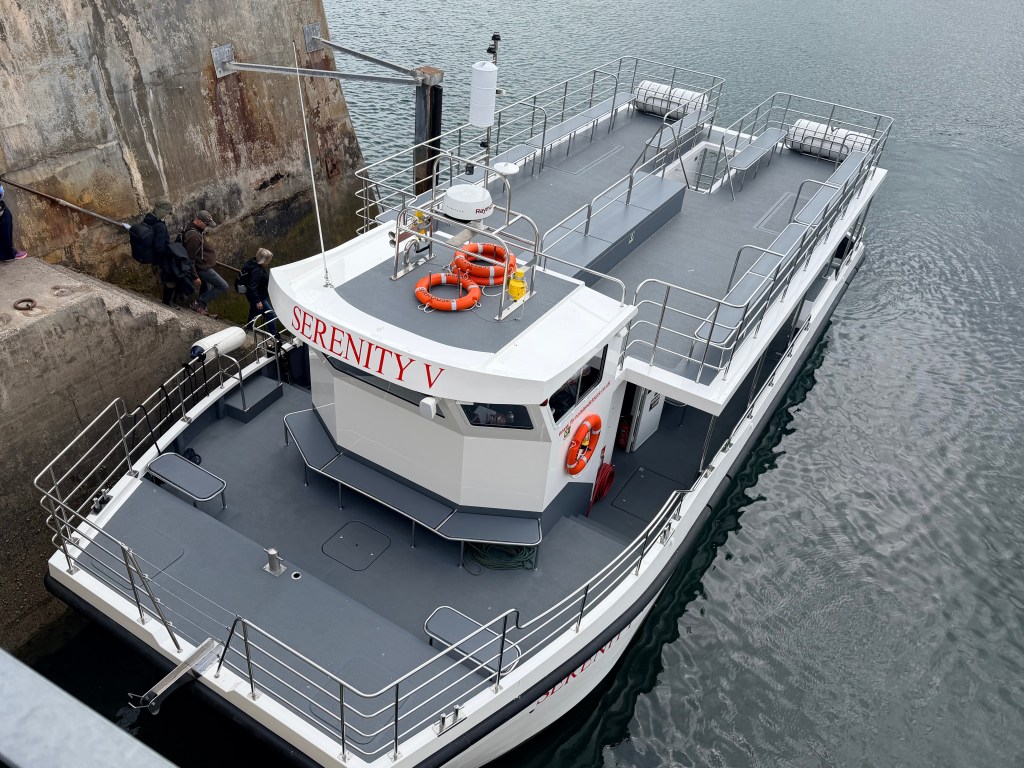

The boat is able to get up close to the rocks, and the boat drivers give everyone an equal chance of seeing the birds and wildlife up close by rotating the boats and getting up close from each side.
It’s also a really nice touch that they have boat hands on board that point out various animals or things of interest. Ours, a guy called Jake, pointed out kittiwake chicks and a couple of gannets I might have missed otherwise.


When is the best time to see puffins on the Farne Islands?
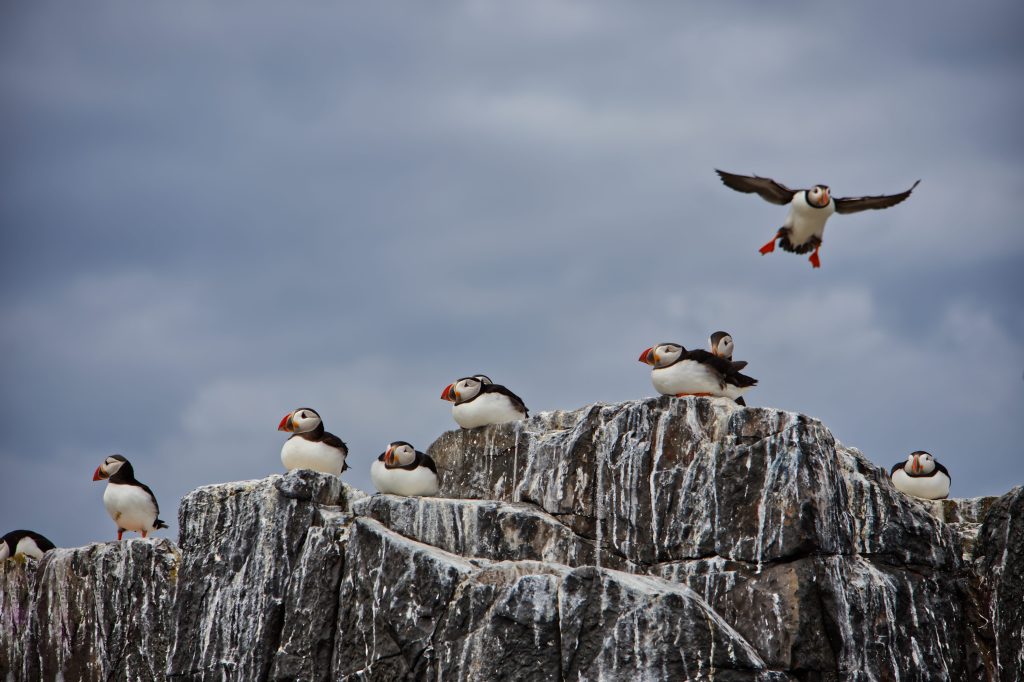
The best time to see puffins on the Farne Islands is during their breeding season, generally from late spring to early summer.
The peak months are usually May to July. It’s during this period, that thousands of puffins – around 40,000 pairs – return to the islands to nest and raise their young.
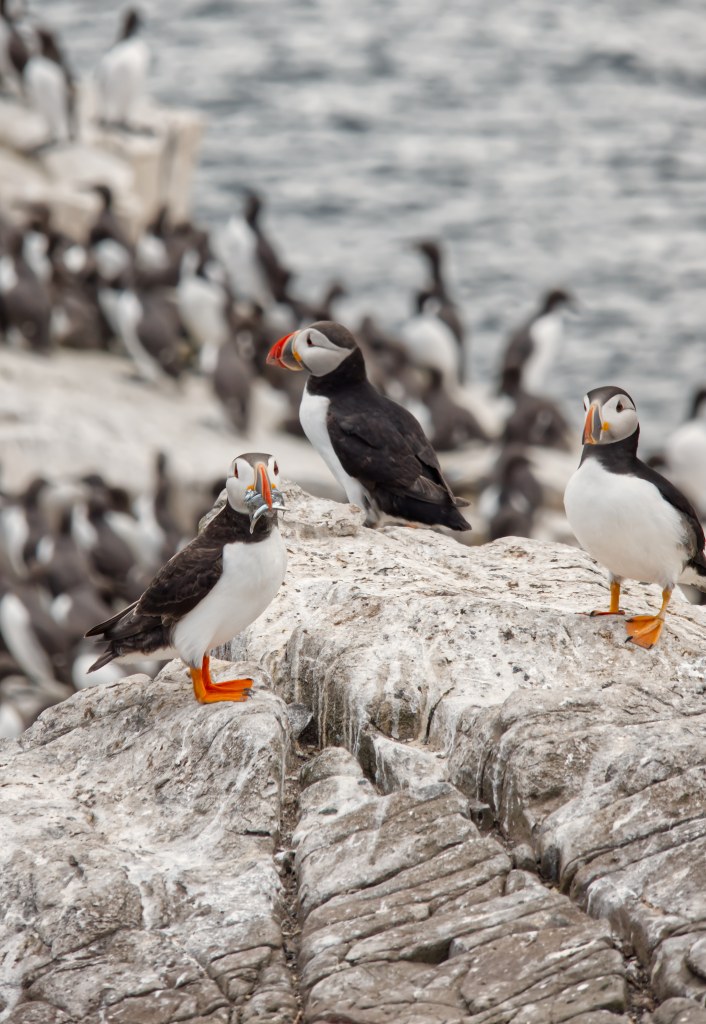
By late summer, many puffins start to leave the islands, so visiting earlier in the season gives you the best chance of seeing large numbers.
For photographers, the morning and late afternoon light can be particularly beautiful, but any visit during the breeding season offers an unforgettable wildlife experience.
Visiting Inner Farne: prepare for the Arctic terns!
One of the highlights of many Farne Islands trips is landing on Inner Farne.
Stepping onto the island feels like entering another world. The paths are surrounded by nesting seabirds, and you quickly realise that the birds are in charge here.
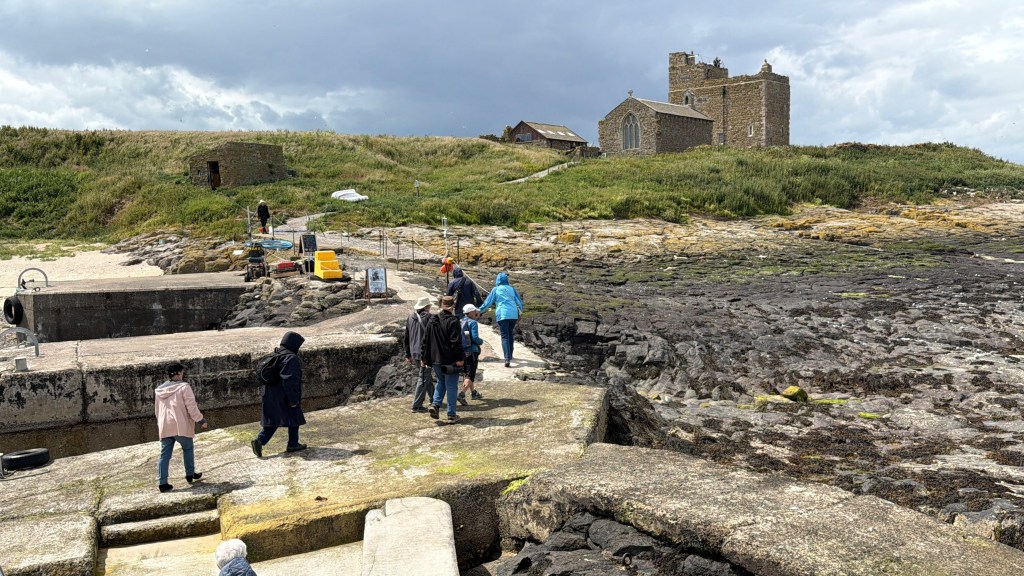
The most memorable residents are the Arctic terns.

During nesting season, these birds are extremely protective of their young, and because they nest on the ground, they willdive towards visitors who get too close. This is why you’re advised to protect yourself from enthusiastic defensive swoops by taking a hat or a hood – not only did I see a few people get dive bombed and pecked on the head, but I got a few nips on my head too!
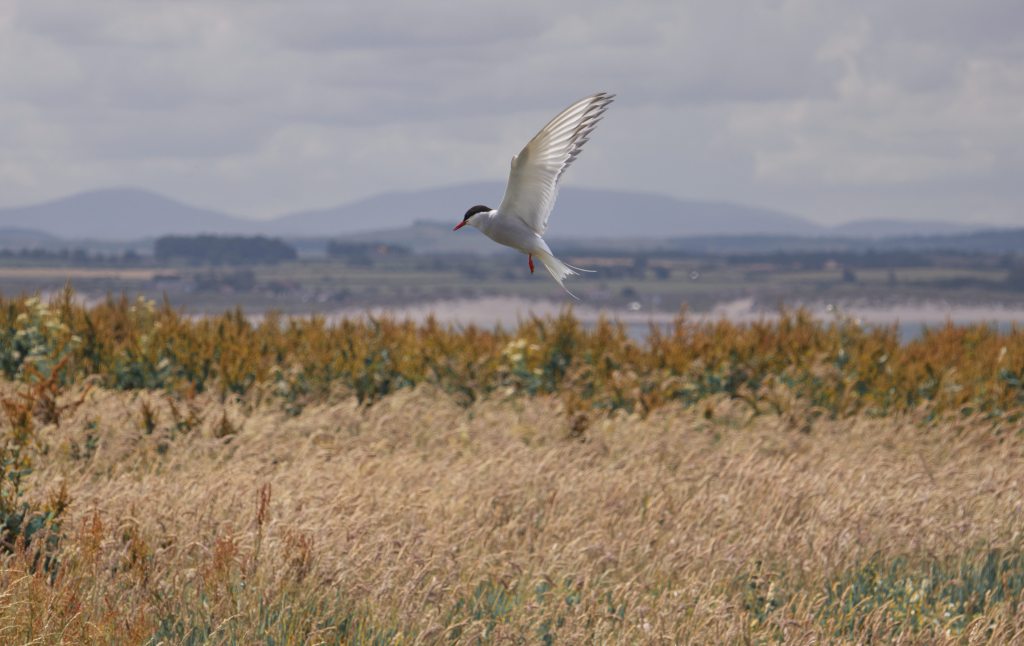
Notably, they nest on the rocks next to the landing strip, so you need to take care from the start. It’s all part of the experience though, and it is incredible to see these beautiful birds so close, but once more, do make sure to take a hat or a hood.


Seeing puffins up close
The highlight for many visitors is seeing Atlantic puffins.
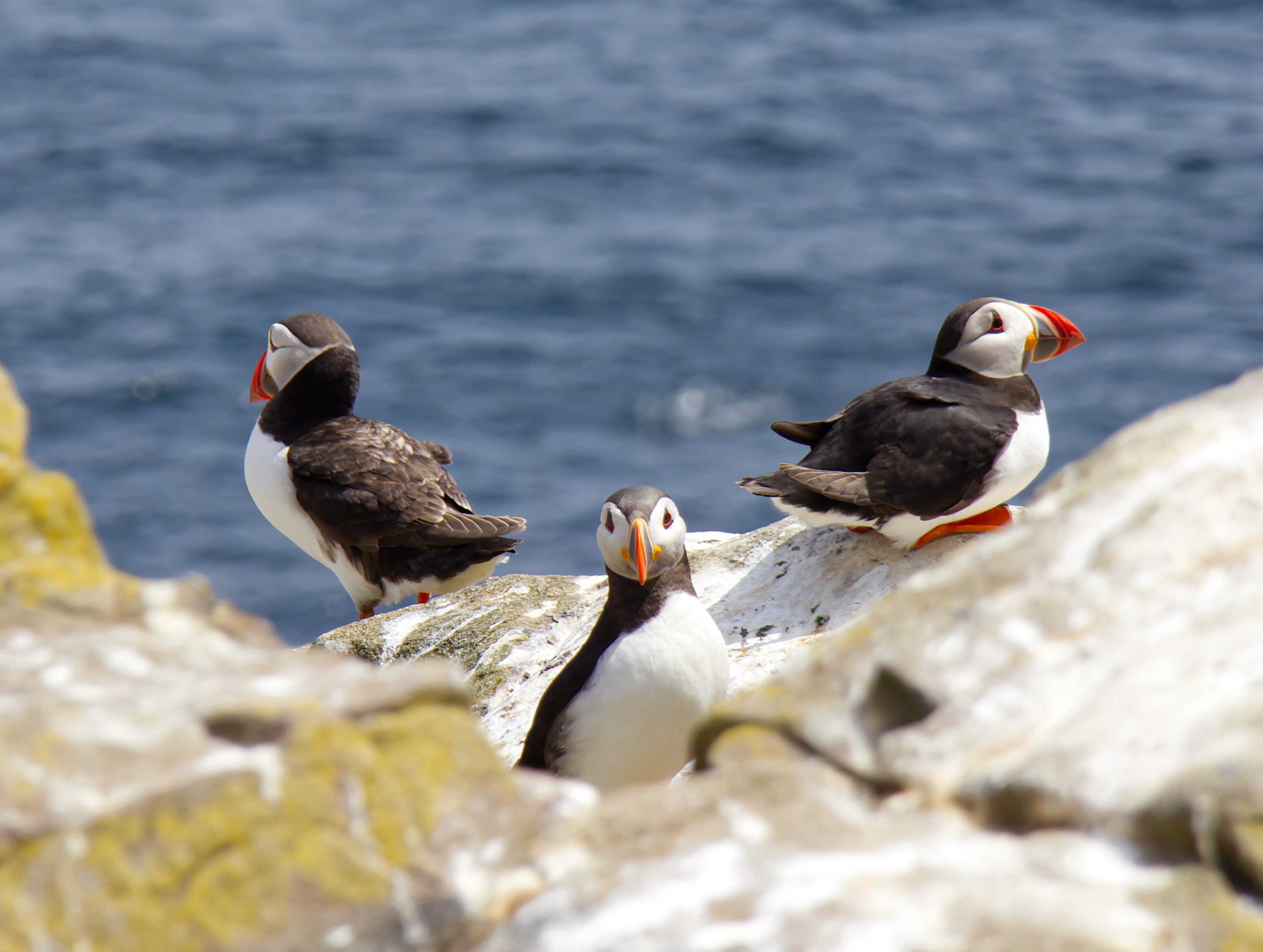
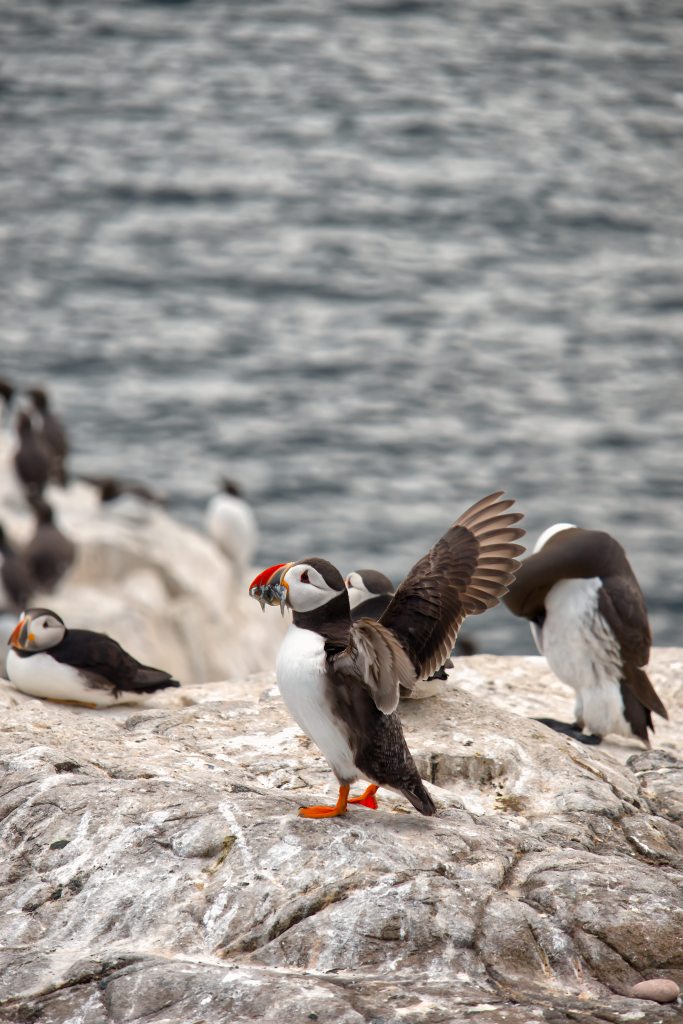
These colourful seabirds spend much of the year at sea, only returning to land during breeding season. Seeing them standing outside their burrows, often with beaks full of sand eels, is one of the most memorable wildlife experiences you can have in the UK, and for photographers, this is the money shot we all want to achieve.
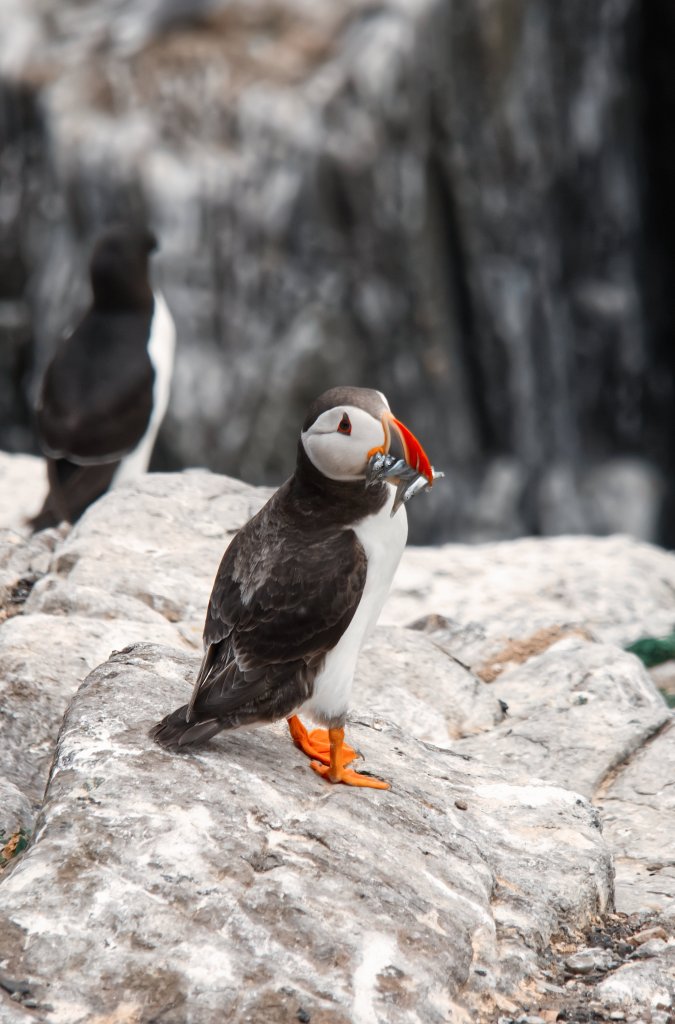
The puffins are surprisingly small, so a camera with a decent zoom lens is useful if you want close up photographs. The island has many paths but the areas where the birds gather are roped off, but you’ll see hundreds of birds flying in from the sea and in front and all around you before disappearing into the burrows. It’s something you’ll long remember.
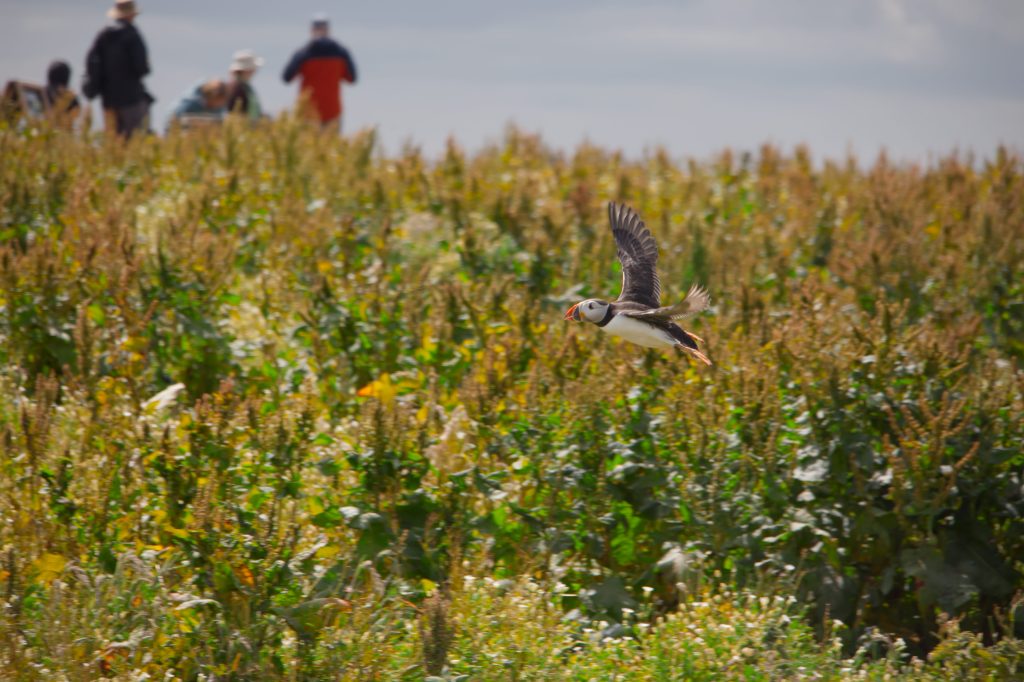
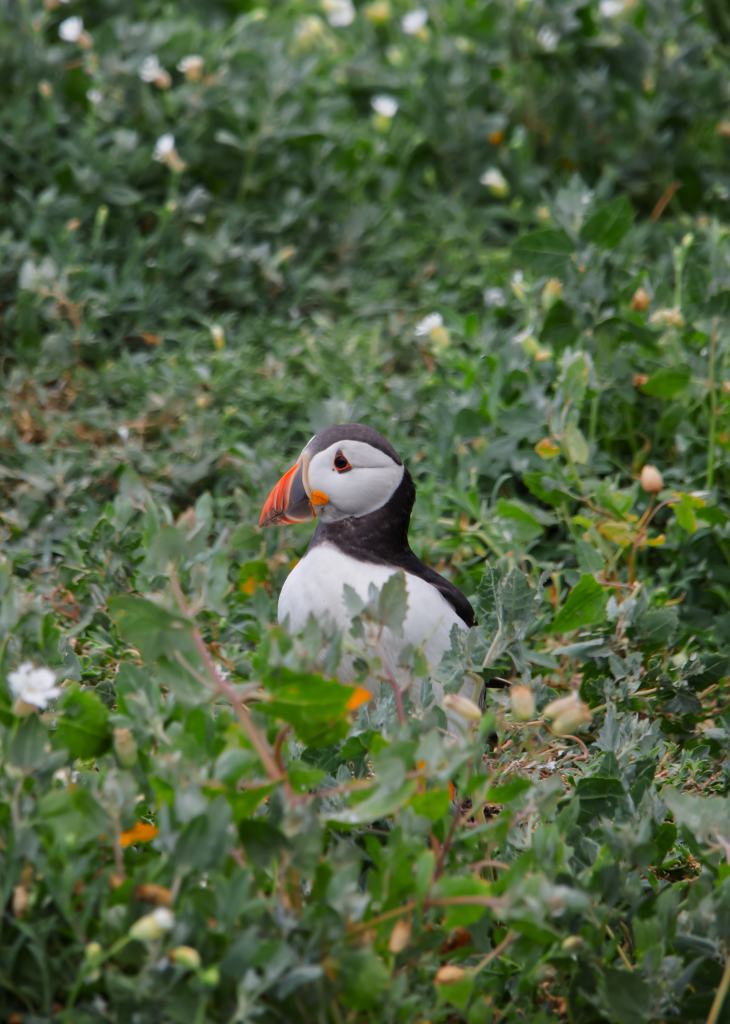
If there is any downside to the trip, it’s that an hour on land is not long enough!
What else can you see on a Farne Islands boat trip?
Although puffins are the stars of the show, the Farne Islands offer so much more.
The boat trip itself is an adventure, with incredible views of the Northumberland coastline and the iconic Bamburgh Castle rising dramatically from the sea.
You may see (and smell):
- grey seals resting on rocks or swimming alongside the boat,
- huge colonies of guillemots packed onto cliffs,
- razorbills,
- kittiwakes,
- shags and other seabirds,
- and as of 2026, orcas are reported to be visiting more often.
The grey seals were one of the highlights of my trip. Watching them swimming and lazing on the rocks around Longstone Lighthouse was a completely different experience from seeing the birds.

My Farne Islands experience
Leaving from Seahouses, the excitement builds as the boat cruises out towards the islands.
The first part of the trip gives you a fantastic perspective of the Northumberland coastline, with views back towards Bamburgh Castle and towards Inner Farne.
As we approached the islands and saw the first few puffins swimming on the surface of the water, the scale of the wildlife on the islands became clear. Birds were absolutely everywhere, filling the cliffs and skies with their movements, sound and, yes, their smells… It is nature, so do be prepared to see and smell bird pooh on the rocks – blame the guillemots for that!
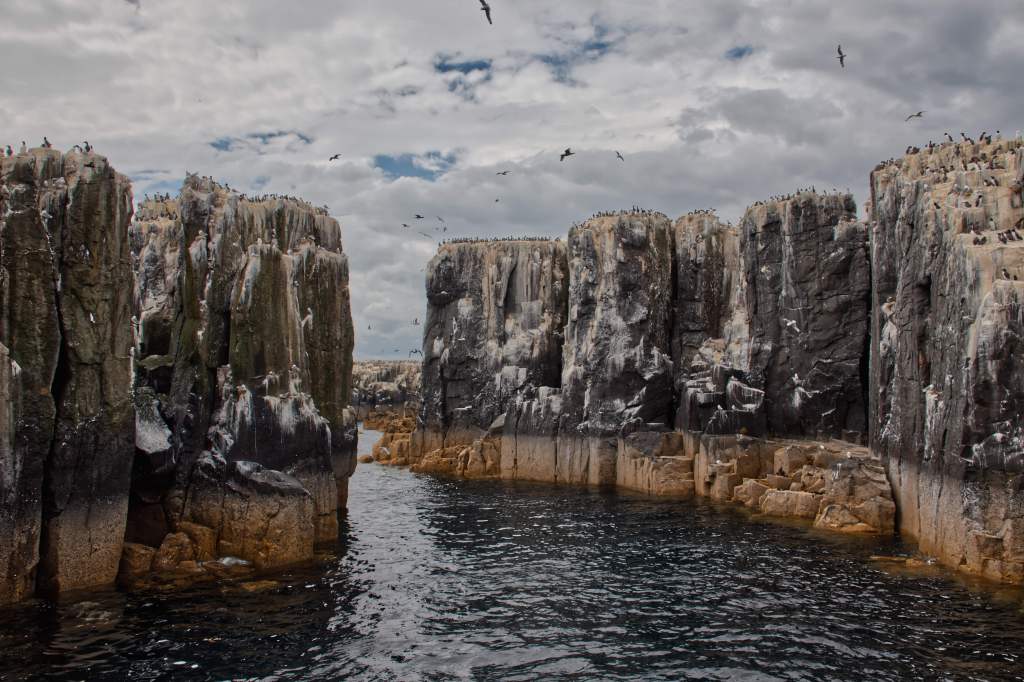


I loved seeing the puffins mingling with the guillemots and other auks on the rocks, as well as seeing the kittiwake chicks clinging on to the rocks under their mother’s protection, but the highlight for me was arriving at Inner Farne, where the puffins, terns and other seabirds were only a few metres away. It was chaotic, noisy and really unforgettable – although it’s a small island, you really don’t know where to go and what to look at and try to photograph first, but what a treat it is to be so close to these birds. Luckily, apart from the terns they seem non-plussed about humans being around and you can get some really good photos or videos if you spot a good subject.
For anyone interested in wildlife photography, the Farne Islands are one of the best places in England to capture incredible bird photographs.
Is a Farne Islands puffin trip worth it?
Yes, absolutely.
For anyone that’s a keen photographer, a wildlife enthusiast or just wants a unique day out in Northumberland, the Farne Islands are a must-visit destination.
The dramatic coastline, the incredible wildlife and seeing puffins in their natural habitat all make it a very special experience.
A boat trip from Seahouses is one of the best ways to discover this stretch of the Northumberland coast.
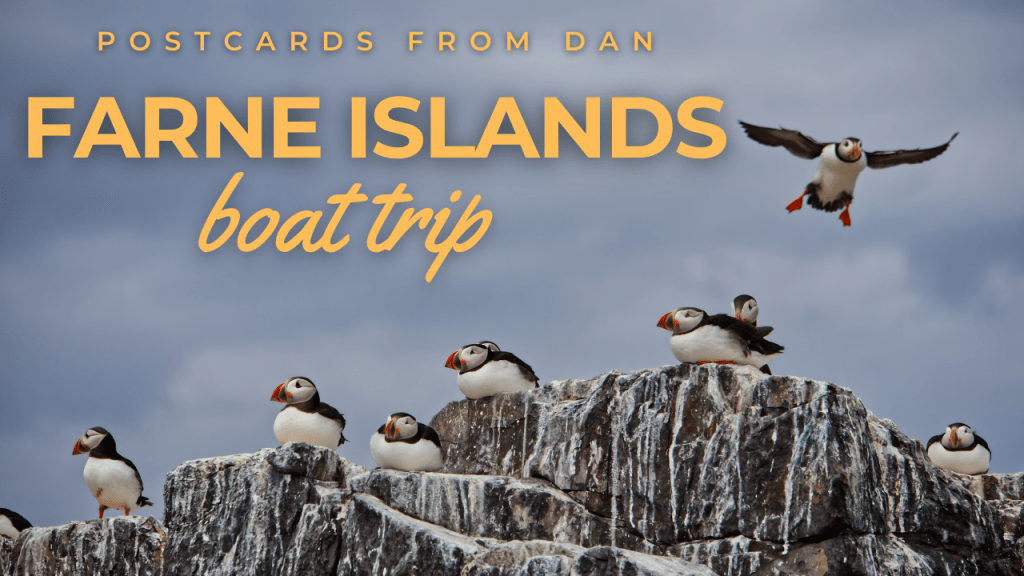
Watch my Farne Islands wildlife trip
Want to see what a Farne Islands boat trip is really like? Watch my full Farne Islands boat trip video on YouTube, featuring the journey from Seahouses and close ups of the grey seals, puffins and dive-bombing Arctic terns, and get a taste for the experience of exploring Inner Farne.
And don’t forget to explore Postcards From Dan for more travel guides, walking tours and photography adventures from the UK and beyond.




2 responses to “How to see the Farne Islands puffins: a guide to boat trips from Seahouses”
Wow, what a nice article and pictures. I would like to visit it at some point, but maybe it may need to be next year now. 😉 Thanks.
LikeLiked by 1 person
The boat tours run all year round, so you can visit the Farne Islands any time. You just have to act quickly if you want to see the puffins this year!
LikeLike